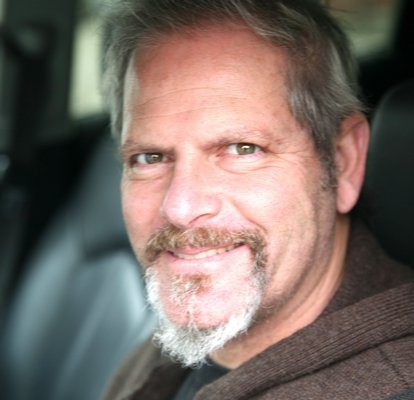
I was born and raised on the west side of Manhattan and New York city.
Nice. Very nice. Cool. Thanks so much for being with us today.
Thank you for inviting
Me. Oh yeah, definitely. So you're an amazing storyteller and you are now a creative consultant for vets international and you're a brand ambassador. Yeah. Cool. That's so cool. Yeah. Yeah. So share some of the things that you're doing with Dr. Scarlet magnet.
Well, you know, Scarlet and I met, you know, and immediately hit it off. I had actually made a, a producer. I wrote a, a short film based on a journal, short story called shooting an elephant. That is actually the sad little story, like a lot of his stuff where he was a young officer in the British armed services and was given the task of handling a rogue elephant, but specifically not harming it because they're worth a lot. But as he went out to handle it, he realized that he had a uniform on and was carrying a gun. And that if he didn't actually kill the elephant, he didn't look stupid.
And so he ended up killing an elephant, not to the stupid, very sad little thing, but I, I care about stuff like that. And, and I met Scarlet. And when she started talking about that narrative and international talk about her work, we shot that little movie in, in Nepal, a little elephant sanctuary called Chitwan. She started talking about hardworking and we just kinda hit it off. We just realized that even though we might have different entry points, that we, we share a lot of the same passionate commitments or sort of living things
Beautiful. It sounds magical. So speaking of shorts and, and movies, Alec has written amazing movies that people have seen around the world. Big ones, like Cheaper by the Dozen money talks, one of our favorites Toy Story.
I want to preface everything. There was, I had a really a long and kind of blessed ride and did a lot of my work. Most of the work that you've mentioned with a partner. So it was, it was collective singular. And that every movie that you mentioned or anything that I've been fortunate enough to be a part of it's, there's so many people that help out. So I think that contributes. So, you know, with Joel, I'll say me a lot of times, it's me, but it's with Joe, you know, I'm writing the first draft. I'm, I'm creating the construction, creating the flow, creating, and kind of building the house, the architecture. But I hear those movies and I always get a little sheepish because there's so many talented people doing so many cool things to make those things seem like they always existed.
And so I philosophically I've never been comfortable this idea of like one person did anything.
Yeah, totally. Yeah. So speaking of a philosophy, I was actually gonna, I was going to ask you going into projects cause there are always different people in different influences. What, like what's your philosophy going into any project or what, what's the first kind of,
Well, you know, it's a good question. You know, first of all, I, I really think in movies a lot and you know, from the time I was three or four years old, almost had like a photographic memory of the movies and where I was and who I'm talking with. And very, very, they just sent me a really deep place. And so a lot of times when I hear about an idea, I used all of that influence and all that training and it really comes down to do, I think I can add something. I think I need to do the job. Do I understand that the renewal, they know who the audience is? Do I know what the objective is, but most importantly, can I reduce it to a very simple idea?
What's it really about? And so the example, again, Toy Story, which, you know, is it was a real and continues to be unbelievably out of body experience for me. But that, you know, you can, you can look at an angle which way I look at it, like the buddy Story, which is, again, something that we're really starting to talk. We were like, look, you know, the oldest written story on record is the epic of Gilgamesh comes out of a stone tablets in ancient scenario now Iran. And that's a buddy story. That's a story of two dots that initially are fighting each other. And then they realize that they're both enriched when they work together.
And so like the very essence of storytelling is really that we're better together than apart. And so Toy Story, this is just a certain thing.
Wow. Who would've, who would have thought by watching that. That's so cool. Super cool.
Yeah. But you ask the question again, I get off topic a little bit. I care about like reduce something to some unifying principle that I think is really I can identify with, but I think it's really important and anybody can identify with it. And so connectivity love versus isolation. That's a big thing for me. If I see a story that actually tells that helps it helps enlighten me or, or helps connect some dots in the head of her. I mean, it, I'm very big on that. I'm very big on the idea that ultimately we tell stories to reaffirm the best aspects of our nature and, and love it comes down to though it always comes in the Beatles and it, right.
Yeah. Very cool. Yeah. So what's one of your favorite books I have that has inspired you in life. So
It's impossible to say one book. I can tell you that there are books that maybe I identify with or, or books that connect dots from when I was a kid, I love this book for an end, the, at a bullet, supposed to be a bullfighting goal, but really just Jason's the butterflies. And I, I can remember being a kid being like, I get it. I just get, you know, that the world wants, sees you a certain way. It wants you to do certain things. That's not who they are. So I couldn't tell you, but I probably five or six minutes the same for me about the same age.
Yeah. And I love historical fiction. I love books. Innovation is, there's a writer, Stephen Johnson who writes on innovation a lot and he's written several books, but one is called. Haven't got to now I love that book. It really changed the way I look at the modern world, but I, I probably am reading like three or four books at a time. Some, I went through some, I take my time, I'm reading a book right now. I have 10 maps of the world. Explain the world. I'm looking for inspiration. I'm looking to figure out things and to find comfort in how other people have lived.
So that I realize that I'm not the first one to go through a struggle. I'm not the first one to do anything. So I do a lot of that. I thought we had a lot of books about people that I've just curious. I've heard, I've read like seven, a hundred percent in Shakespeare.
Oh, I love Shakespeare. I was wondering if you like Shakespeare.
Yeah. And what I love is when I read the buyers, it's not a lot, actually not about the guy, whether he actually did all the writing and who knows. But what I know from what people have written is now I understand the place that supposedly he wrote so much better. And I wish I had, when they taught in school, when they taught me in school, I wish it, they actually taught me about the people that were writing and expressing themselves. And the actual time that the things were written donkey, Hotez probably, it's very hard to get for a little bit. It's like one of my favorite books, as far as this basic belief that we're inherently heroic. Even if we're misguided, as long as we're moving forward and acting, it's like the human thing, but I can go on.
And I like the greatest part about living a life. As, as a professional writers, I get to read a lot. So I would like the real, real reason I'm doing it.
Not only reading, but you enjoy audio as
Well. Audio books. Yes. And now I find when I lived in Los Angeles, which I did for a long time, I'm in the car a lot. Sometimes I get to too, not to turn into a CD on, by an audio book, but I tend to like listen to music and kind of counter program, those experiences and really let my mind be more at ease. So I haven't really kind of gravitated to that platform. Although every once in a while, like the Keith Richards book, it's worth like you're getting a performance, the kid stays in the picture, which I just remember listening to it and being late to meetings because I didn't want to turn it off.
Yeah. Right. And then what, like, was it being read literature at a young age that got you into writing or what, like, for example, for me with music, it's like, I heard, I heard, I always grew up with music, but it was Tupac. And I was like, oh, where we connect in a certain sense. And then for me, I was like, I have to start storytelling. So what, what was it for you that, that lit that fire?
Again? I, I would say movies, movies hit me in a different way.
Is there a specific one or just in general,
I'll tell you a little anecdote about movies and hopefully it kind of sums up a lot of things. If the sum of the parts might not be equal to the what, when I was four or five years old, my mom's mom and my, my nanny, my grandmother took me to visit feel theater, which at that is on 54th street off of sixth avenue. Now it's a nice theater, but at that time it has fallen into disrepair and to watch modern times that Charlie Chaplin film. And I remember like going into that theater and seeing like a cathedral, it was like the big staircase, massive stuff on the ceilings and all that stuff. And going in and watching that movie with her and thinking it was the funniest thing.
I think Charlie Chaplin was the finest creature ever created the lights come on. And she says to me, he laughed and all the right parts. I felt so. And the, but here's where the story actually gets profound. She's now like years later, I'm out in Los Angeles, I'm beginning my writing career. She's in her mid eighties. And she started to kind of really lose your or her mind. And I hadn't had like a substantive conversation with about three or four years or whatever. And she was in a nursing home back on the east coast and on my last birthday that she was alive, two shows up in the mail birthday, different her.
And I suppose to modern times and that's, to me, that's I still have that. That's. I mean, that's why movies, books, music. That's what you're hoping, you know, think about that. She can saying her version of the same experience all those years. And it was as powerful for her. And, but yeah, I, I loved the Marx brothers. I loved, I was always trying to calm. I tend to, I tend to run a little bit too dark thoughts if I'm left alone. And so comedy, so always just, I wanted to live in those worlds, you know, who was a comedian in the fifties, Danny Kaye. He didn't like, oh yeah, I
Love, I love what's the one where he did like Robin
Hood. It's a I grew up just loving those movies and wanting to jump on the screen. And in a way I think even though I couldn't verbalize it through my education and through my early adult, the whole reason I gravitated toward smear writing is like, ultimately, that was so strong. I just wanted to leave. I still, like, I don't care about the businesses as much. I don't care about re life as much as I actually care about like that feeling I did, of my imagination of what's on the screen.
And actually there's a Buster Keaton movie called Sherlock, Jr. That he made 1924 or five 40 minutes long. It shows you the magic and movies. It's the greatest fucking movie I've ever seen. And it's, again, one of those things where you watch it, you're like, I wanna make movies. I want to, I just want to be part of that.
Well, yeah. Well, thank you for sharing the story about your family. That's a great, beautiful story and how the connection was so powerful and strong. And I'm also wondering, so some of this, and so what you do, you're involved in a lot of children and family movies. Yeah. So, and that just happened by luck. He just fell into it.
Yeah. I fell into it. You know, when I moved out to LA and really began my professional career, I wrote late night comedy sitcoms. My, my target was always trying to write movies and the movies that I was writing first alone, you know, with Joel where heart action are rated buddy buddy movies. The first one we wrote, I became a movie money talks. The second one we were hope was a script that we never could get anybody to buy. I never made a penny on the script. It's called the gluten policemen live hard edge movie about kids and guns and toy guns, real guns and cops. And I'm like page 11 or 12 of that script, a kid.
Yes. A president opens it up and thinks it's a toy gun. And he ends up killing his family. Right. We were going like, we were going balls out and making a comment. There was a character buzz and a character within that script. That scene is the scene that got us the mid at him. And then as we started our process with, with those two teams, at some point, we're like, why don't we just say the personas of buzz and Woody from that other script and apply it to the conversation we're having now, because that script's not going anywhere. And, and so, but that, so then Toy Story happens. And all of a sudden it's like, you're giving the keys to the candy store, but everybody wants you to do kid stuff.
They're going to family stuff. I never started Toy Story. As a kids movie, I saw it as they were growing up into a bodies. And so they had grown up emotions. And in the first draft of Toy Story,
I remember I was like yelling. I remember it was very adult if there were kids, but they seem mature. They seem like
The first draft of Toy Story. There's a montage of Woody's that actual Woody dolls backstory that starts with he's a, he was a ventriloquist style initially that he was going to be the doll of a ventriloquist. He was going to be on the ed Sullivan show, but it's the night, the Beatles around it. And the ventriloquist never gets on and he gets drunk and leaves that Woody in the back of a taxi, the cabbie brings him home, the next kid hasn't. But that kid texts in the Woodstock and he leaves a Woody in, in the, in the mud bottle, Woodstock, he gets found again, then gets taken home. The next kid somehow has him in it and like leaves him on the floor of studio 54.
We had like this like Forrest Gump, like thing to basically say he knows what it's like to love somebody and be thrown out. He knows what it's like to be abandoned and really helps set up the DNA of his character. Because in the first draft, when he finds out, he's actually just a Toy, tries to kill himself in that first strap. We went to that place. So, and there wasn't a kids movie in our minds, but then it comes out and they, they, they pull it all back and they did the whole thing. And then, you know, just as a human being, I'm starting my own family. And then it's like, would you like to write another animated movie? Would you like to write Garfield? Would you like to write? You realize it doesn't and whether the answer was yes or no inside, I was like, so blessed to have the opportunity.
That's like, yeah. And over time I realized, actually care so much about the safety and the, the wellbeing of children. I'm a big child inside of myself. And I really identify with that. And so over time I realized, well, maybe I didn't just fall on him. Maybe he spoke was always supposed to happen, but that's how it happened in my false sense of control. Then they think that wasn't what was supposed to happen at some point, but it was always supposed to be that.
Yeah. Yeah. I think there's a really cool message in there as far as like one sticking with something, right. It's like people will have an idea about something and then, and then maybe like their circumstances changed, but you're like you eat something from a while ago, you're able to change the perspective and to make it brand new. But also also being able to say yes, in an unknown circumstance, it's like, you're maybe like you're creating movies that are a certain way. And then all of a sudden something changes and it's like, I could keep going into this old pattern, but this is a new world. That's exciting. And I feel like maybe, you know, you can speak a little bit more about that, like into the world of like, I don't know what's going to happen, but this feels right.
All right. Well, all right. So I, I can never remember the exact words, but Dr. King, my favorite quote, which I'm paraphrasing is that faith is an act where you're taking the first step on the staircase. You can see. And I think that writing's definitely an act of faith living into an act of faith. But for me, I, I just, I understood the things. I still understand the things, I understand how we overcomplicated our lives and the world comes at us and creates chaos. It seems, but that we're still all basically inner children. And while we still want what we want and when we were children now just cause with a lot more conditions. And so yes, the answer is maybe this is what was always supposed to happen.
I was just open to it at the right time.
Yeah. Very cool.
Yeah. And it also sounds like doing everything that you just talked about, connects you with your spirit, wholesome, connecting you with your spirit through play and fun and Animation and children. And now you're involved in VI. So I mean,
Absolutely. And by the way, Steven Johnson to go back to the writer, his latest book, I think it was called play land. And it's all about how our need to play. And to actually also define the modern world. And he looks at innovation to all the innovation started with just indulgence and play, including music, which there are instruments that go back 80, a hundred thousand years in different parts of Europe. And the argument he's making there, it's just like at a moment where survival was much more primary, there was still a need to make musical instruments and make music. It's a core aspect of,
And before you were mentioning something, it was like a 1648 and it was, it was with water and you were telling me,
Oh yeah, yeah, no, yeah. So no, well it's going to be really convoluted. But so in how I got to now, the first chapter that he wrote about Israeli, about looking at, looking at how I'm going to have to try and get this right, looking at how with a collar outbreak in London, in the 1850s and Chicago, having an issue with their sewage in the 1890s and a guy living somewhere in New Jersey, looking at the water source, also around the 1890s, you know, the first one has to do with, you know, realizing cholera was waterborne. The second one has to do with that.
You have to separate the water, the drinking water from other water. The third guy was all about realizing by putting some chlorine in the water, it makes it healthy. If you put the right amount, then led to somebody on the west coast of America, thinking I can use that chlorine for industrial reasons that didn't work, but his wife invented chloride. And then all of a sudden you have house products and the house gets clean. You also get swimming pools, you get water getting safe, but then it creates fashion and creates like, you know, bikini. He creates the surfer life and creates like teenagers. So it's just all these simple, all connected. Like it's not, you can't look at one thing and say, it was always here. There's a million invisible reasons why things are where they are
On a macro and micro.
Yeah. I think there's kind of like a running theme here. And I think it's important to talk about just because I remember you talking about how the man who put the chlorine in the water, he got jailed and, and it's, it's like in history throughout history, there have been people that have said like, this is this way. And they put their life on the line,
Copernicus. I mean, it's absolutely, you know, and, and original thought or new thought is, is threatening to people and institutions, institutions, especially not individual people, perhaps, but groups of people, institutions by their very nature of look backwards, something is created to, to, to hold something to the holy time backwards. Very few institutions look forward and say, we need to break the Institute. It's why like the punk movement at its core needs to destroy yourself. It's because the only way to stay pure punk is to blow it up. You know why like, if you, if you, if you've Revere it too much, you've destroyed it without it in an imperfect way.
So absolutely. You know, the outlier will lead us in rock and roll. I mean, we're spending a lot of time talking about music, but rock and roll. Whether you want to look at, you know, you know, early like white musicians, making black music or black musicians being heard by white kids, rock and roll was ultimately this threat. Cause it was outside the norm. Right? But I'm bouncing all over the place to go to storytelling, storytelling. So rock and roll can exist without the transistor radio. And the transistor radio gets invented. And because the transistors invented during world war two by bunch of Texas instrument engineers. And when they were making it, they had no idea they were going unleash teenagers on the world.
But what it did was when they created that transistor radio, they took culture out of the living room where the parents and the grownups control it. And they gave it to teenagers to say, you can now control your own culture, but that's not different than the him. That's not different than the Walkman. That's not different than all the things that had just become new platforms to tell stories that you give people that their own control and that's the threat to the institution. Right. And that's why you're an outlaw before you're saying,
Yeah, I love this. And then speaking of music, you have three children
And
Two, and then one's Eli. And he makes music.
Eli is a, is a French bank or the living Strange, it lives in Brooklyn. He like picked up a guitar when he was about five and never put it down and Place five instruments actually built it, the guitar he uses their bands, Greg. And actually if, you know, even I, it wasn't as pop. I listened to his music a lot because it just make, it gets me into the right head space. So like, but yeah, I love that. And my daughter, Maya is a, a writer and an artist, both are emerging, both are finding their voices and both, you know, I think have a lot to offer.
They both have websites.
Eli's living Strange dot com, Maya, Maya Sokolow dot com. She actually, she does a lot of things. She she's, she's published in poetry. She's written plays that have been read in New York city. She actually is now painting portraits, which she does with her fingers on newsprint. But as, as, as their pop I'm as proud of the fact that my also went to India and taught at school earlier this year. And there's a lot about the oceans and that Eli actually is, is trying to use music in his music, especially to, to make sense of his world.
Like it's a true artistic endeavor. Like I care more about that than the result.
And a little later here, we'll here. Some of Eli's music.
Yeah,
Yeah, definitely. Yeah. It's, it's gotta be pretty cool having children that are also in entertainment and being able to offer your perspective and,
You know, we as humans, like we all learn by doing so I felt like, you know, we were talking about books before. What I think my biggest influence in life is Joseph Campbell. And I don't know if you know Joseph Campbell, but you know, he would say a professor at Sarah alarms for about 40 years and he started primitive mythology or storyteller. And he did it from the 1930s to the 1970s or so. And what he found is a matter where the stories came from, there was a common DNA to stories that humans tell that he then distilled into something called the hero's journey that rings a bell and the hero's journey. How am I going to be able to walk you through the whole thing? 11 beats that somebody starts somewhere has a call to action, goes out to a quest for something, you know, has need to mentor has challenges has this.
And that ends up in a cave where he has to slay a dragon. Dan comes back, not with the thing or he or she was looking for, but with the wisdom of the journey. And then it comes back to people or, you know, his home and they don't really care. And that's, that's the great kind of tragedy if humanity repeated again and again, and again, that to me is really what's going on. So you create something you're inherently heroic for taking that journey and what you're actually creating the value of that is not what is great. It's the experience of creating same thing with writing, same thing with, with Living.
I don't like that you learn by doing, and you're the richest people in the world have gained wisdom, not and stuff.
And so recently you wrote and directed a new Animation short.
Oh yeah. Well, I, I co-wrote and co-directed that came out from a documentary. I met a woman, Mary Mateo, she's a documentary and out of Boston and we collaborated on a documentary called IMJ and dough, which is on Netflix right now. It tells a story of a number of thank you. It tells a story of a number of young women and their mothers who were women. The younger women are survivors of sex trafficking. And it tells a story of their desire to try and shut down the website that they were advertised on and change the law that allowed that to happen. It was very profound for me, really like unbelievable personal experience.
But as an adjunct, we were able to get a budget together and decided that let's make a little Animation, short, almost like a PSA or something that could begin a conversation or further some wisdom for kids. How not to not get pulled into that world to begin with. There's an organization in Boston called my life, my choice that is prominent in the documentary. And so, you know, I slash, we went to them, asked if they'd be interested in, yes, it culminated where I wrote a script with Mary. And then we brought in 12 survivors, 12 kids, the leadership council of my life, my choice. And we actually collaborated on the material, you know, where it's like, you know, you got this right.
You got this wrong. No, this is what really happens. This does all this stuff. And then because of the shooting, an elephant movie, I mentioned before, which is making the festival runs. I got to know some animators from Chile, or they have a company called punk robot. And they won an academy award a couple of years ago for Animation shortcut their story, which is a beautiful little movie. I don't know where you can see it, but please go see that because that was fantastic. But I reached out to them and I said, Hey, we got a chance to make this fan. You guys, we do want to do it. Yes. I'm like, great. Well, I'm not taking any money. You can't take any money either. Let's just go make something. So now we got them doing it. Jessica Chasteen had provided the voice for the documentary. And so she also provided the voice for the Animation, shorter.
Also someone making this beautiful little movie with the girls voices and their stories, maybe my expertise and skill set, conch robot, bringing their thing, Mary bringing her thing. And we've made this thing. And now it's being rolled out in schools and other programs around the country. Most of the middle schools to basically say, here are the, here's the way that you get seduced and are brought into this world. And so just give me some skills and it really reduces to not all that glitters is gold. And how, if somebody is offering you something that's a little too good to be true, probably is it kind of, is that so that actually I know it might be just word. So that was like the greatest experience I've ever had because to work with these kids and then get to know these kids and know that they're not defined by what happened to them.
That like they are not what happened to them. And to see that even in the time it took to make that movie where now, like I laugh a couple of months ago, I was back up in Boston. I saw three of these young women and they're all getting into colleges and they're all kind of starting their adult laws. And you know, these were, these were kids that were basically kidnapped, enslaved and raped repeatedly from the ages of 13 to 16 or 17. I know it's horrible, but, but fine, we can't change that. But what you can change is what happens now, what happens today? And then again, going back to the inherent heroic journey, that Joseph Campbell thing, how do you make something that seems horrible, heroic?
Well, you use that as the value of, of that's your wisdom. That's what you bring forward. That's how you protect. That's how you actually help. That's the real fucking message. That's the thing that I want to talk about. Right? And that's the, that's the real sauce right there. Wow.
I, I love what you're saying. I feel like a lot of times people hear stories or they go through things and there's this feeling of like sadness and sorrow and that's definitely one aspect to it. But to what you're saying, to your point, it on one side, it makes you unbreakable. If you're really able to have that, that courage, but also the community around you. But also to be able to share that with other people, like the ripple effect that those people are making in the world and to be able to like the world that we're going into is preventing and stopping all of this stuff and breaking down all of these walls so that we can have healthier boundaries and to really uplift people. And I think that's super cool.
Well, thank you. But I, I get, I, you know, in my mom, the greatest gift anybody gives himself is service. And the more you give in the world, the more you actually get back. I, and I know that other people have said that more eloquently, but I believe that. And I actually think that the real shame of anybody that's suffered any trauma is that their inner heroic narrative is taken away. And so I can't change the past. Nobody can change the past and we haven't lived the future yet. But what you can do today is like, say, how do I take whatever I'm carrying with me and try and make a better situation or a better future with that.
And that again is in my mind as well. You, you, you bring your story or you help somebody else tell their story, sharing that vulnerability for sure. 100%. So I'm, I'm big on,
Does your website look like it was made for free by your friend? Make a better first impression with Actor Gear dot com load faster, look better. There's literally no reason to build a website any other way, use your own domain and get a website with no ads to keep the focus on you. Go to Actor, Gear dot com and get 50% off your first month when you use the signup code. K star.
Thank you. And then just like maybe in simple terms, what are some things, have you found along the way? If, if people say, Hey, I want to be in service. I want to serve more. What are some things people can do to, to just go and serve? It's their kind of new way.
Okay. I think that's a great question. That's that to me is so my, my epiphany through IMJ DOE my desire with VI my desire, actually moving forward with the amount of energy I have left in this form, all it's about, I can't change the law, but I can tell a story. I can use my skills. I can use my areas and spheres of influence to try and just move the needle a little bit, or be a little flashlight for somebody else, because I might have a little influence. And so in my mind, I would say to everybody, you have powers.
You don't even know you have, you don't even have influence. You don't even know you have, and you don't have to step out of your comfort zone to necessarily make a change. The biggest leap I took was the leap of saying, yes, I want to do something and I'm not going to put the deal or the final number in front of the conversation. That's the only real thing I did when I started working on that documentary. It's like, nah, this isn't about numbers. This is about, oh yeah, I can help. I can help do what I do anyway. I would help doing what I do for nothing anyway, like, you know, telling stories. And, and so I would say to everybody out there, you become heroic in your own skin, in your own life.
If you just do what you can, but that doesn't happen by itself. Any Murphy used to have a joke, the crack don't smoke itself. Well, change doesn't happen by itself. It happens because individuals decide to change something. And in that decision again, is that, is that hero's journey in my opinion.
Yeah. I think that's super important, especially now the world that we're living in. So many people just want to be, you know, social media famous, or it's like, people will say like, oh, I can just like go out there and, and, and do what everybody else is doing. And in music, you see this and creativity, you see people, oh, this is successful. So I can do this. But to say, like, there's something inside of me to be able to be vulnerable and to express something that I've, I've done that. And being it's like, people won't understand this part of me. And then all of a sudden I find myself sharing and then there's this amazing connection. And, you know,
I mean, look, there's something inherently fragile about social media because of whether you are a posting for yourself or your friends or for the entire world, you're broadcasting of an idealized version of something usually yourself. And that's not real, it's just not real. And, and so again, like for me, honesty and vulnerability are actually strength. That's not weakness, right? So for me, that journey starts inside and I have to clean up my side of the street. I have to clean up my addict.
I have to clean up all this stuff like that. I carry all my guilt and my Shannon, all my experiences good and bad, and put them in a perspective where I can look at them and say, okay, they just got me here. And so that might feed a planet on the ground. Whereas, you know, the problem with social media, the problem with technology or our potential problem technology is that there's so much, we don't control as individuals. And yet we expect to have value. And that, that just seems like a formula for anxiety and disappointment.
Yeah. Yeah, definitely. So moving forward, you'll just continue to tell stories through play.
My writing is a, it's a terminal career, so I'm going to do it until I stopped breathing, moving forward. I love, I still love movies like I did when I was a kid. You know, I've got a chance to tell some stories in video games. That was amazing experience. I've done some book things I I'm always looking for. You know, to me, it's never been more platforms and more ways to tell stories. I've never been more screens to tell stories on it's like we, we were actually living in, in, in the matrix. If you go to the grid that we don't even realize we're living in that if you want to look at it as a canvas, so you can paint on that and, you know, with geotagging and with virtual reality or with augmented reality.
And, and, and so I moving forward, that's what I'm going to do my whole life. But what I will also do, which is really been the greatest gift I've given myself this continue to try and help people to other stores and maybe people who don't have the platform I might have. I'm getting involved with another organization in Boston called college bound. That takes a lot of ex gangbangers and tries to get them GED, to get them into college. I don't even know what I'm gonna do with them yet, but I'm going to try and help tell it, like you're showing up, I'm showing up, but the boots on the ground. And again, VI, you know, I, I, don't, when I met Scarlet, it's like, I don't quite know how I can help.
I want to help. Right. I care a lot about the fact that we're all sharing the spine together. And we are the dominant species. We are the ones in control at this moment in time. And so it becomes our responsibility to try and use that possibly in our responsibility to help any way we can. So moving forward, I want to spend as much time doing that while I still have to pay my bills and make sure my kids are good and do all the other stuff that humans have to do.
So, yes. So if you know, there's someone out there who hears this and they have a story to share and they want to be vulnerable, or maybe give you a slice of their life. Maybe they could be an inspiration for you to help, you know, contribute to the serving. Maybe it's them serving. Is there a way for them to maybe connect with you on your website or maybe through vets International?
I would say through vet center, I don't have a website I'm like really pathetic with stuff like that. I'm on LinkedIn. That's like, you know, I'm on Instagram as locus land. I think if people want to find something they can, but I would say start with, if you have something to say, say, you know, and, and don't, don't feel like what you have to say. Doesn't have value. Everybody has value, you know, and if you can say it in a room with one person can say in a world with millions of people, if it connects. And so I would say that, but, but honestly, like how you get in touch with me, you get in touch with me.
Yeah. For VR for this moment in time, that's probably the best way.
You never know if someone has an idea or some inspiration from everything we've talked about and they want to contribute in some way definitely. Or get involved with Veterinarians International.
Absolutely. And understand that, you know, just because something's out of sight out of mind and, and you know, the wellbeing of, of a creature halfway around the world does impact you. You might never even know it, but it impacts you the packs you, because of the, the disease that doesn't spread, but also culturally the love that goes into that, that then will spread. And, and so, yeah. I mean, I, I think that I, you know, I mean, I'm all over the place. I know my mind goes a bazillion miles an hour, but I will say it like, I actually believe love is not a human construct. I believe love is an elemental aspect of the universe.
The universe exists because of love. If you actually think about love as just the laws of attraction, what brought all the atoms together? What brought all the planets into creation? I brought all the energy. It's some attraction we can understand with our human brains, but it's there. So our opportunity in our life forms is to touch that love. And you do that by being open to what you don't know, you do that by helping out unconditionally and not expecting anything back.
An example of what you just said. So beautifully is literally this moment right now. There's so much love here. I feel it. I sense it. I see it. I mean, there's love do you, right? Do you guys feel,
And that's openness and that's connection and that's trust and that's fun. And it's, it's, it's the best aspects of consciousness.
Yeah. Cause some people, you know, there's that we can go into the whole thing about love of healthy love, unhealthy love. I can't obtain it, touch it, but in you feel it in your heart, you see it, you know, in your glassy eyes and in the moment of doing something unconditionally and you just know and it's
And deal with the word unconditional, right. And without like parsing or breaking it down to do something and expect nothing back is dabbling. And even that's something to aspire to because I certainly was raised with it. And I was always supposed to get something back very insecure. And then over time, part of the lives in life is realizing when I don't expect anything, I'm always happy. And so unconditional love is actually for me, the goals still. And that's how I practice. I don't know if I ever tell her, but I practice. So yeah, actually,
Yeah. Practice and discipline are everything. So I'm just wrapping up here. Lastly, I have two things percolating on my mind. One is where somewhere in the world that you haven't been yet, that you really want to go.
Well, you know, I was talking to Scarlet the other day and she was mentioning that she she's going to Myanmar. And I was like, show me a couple of thoughts. I'm like, I don't want to go there. And she described the culture and it just got everything. I'm like, I, that's not on my radar, even though I don't know how or when, or where I got, I want to go everywhere. My problem is, is I can't, I can't go everywhere, but that can be leads me back to books, books. He take you around the world and you never leave your living room like that.
And then, and then recently you went to Sweden and you were there a storytelling with the animation film.
Yeah. I'm making a little movie with an animation motion capture company. They're called studios. It's a really, actually, it's a really cool little project. I say little because the budgets are actually really smaller over there, but they have very cool technology, motion captures green screen technology. They have all the Harry Potter camera rigging. They have the most amazing system like pipeline system. And We, and there's a Swedish astronaut named Krista who I believe is the only person I ever heard of who was a cosmic ad, an astronaut who's been at outer space, who also is an astrophysicist at CERN. And he's written up series of children's books to help make space, travel, and time travel understandable for kids using actual science.
And so we're adapting the first one for the Scandinavian marketplace to basically show people what we can do with this technology. But I'm spending a lot of time in Stockholm. I love Stockholm. I love the sweets, you know, again and blessed to have the opportunity.
Yeah. And then lastly, you know, we were talking about empathy and empathic, so maybe you could share, or we can talk a little bit about empathy and, you know, having, cause in the beginning of the conversation you were mentioning your connectivity of films and how they moved you and how you really felt it.
Yeah. Well, you know, part, part of my, I don't know if you want to call it training, but part of my experience in writing Animation and writing, you know, the case of toy story toy in case he could refer the cat is starting to like live in my imagination, but live inside of other creations, but other things and thinking, what do they feel? What are they you, are they happy? When are they sad? One of the first meetings I ever had with Pixar, they play this little game of like, when has a glass happy glass happened when it's full? Is it happy when it's empty is happy when it's being used? There's no real answer, but it helps you to start seeing the world in a more empathetic way. That certainly has been the journey I've been on as a person where I have, if anything have too much empathy, sometimes catalyzes me.
But yeah. I mean, I think that, you know, I have no idea what the world and universe actually is like to a dog or to an elephant or to, and Hey, probably don't know what it's like to know here in Vegas. I know what it's like to me, but I can empathize and I can respect that their version might actually be as pure as my version. And so then we're connected and they're common and then we're not different take different forms.
Beautiful. Yeah. Yeah. Well, thank you so much for doing Awesome. Awesome. All right. See you next time. Thank you so much for joining us. We'll see you next time. Kyriaki, over and out.
Check out the She’s All Over The Place Podcast! https://www.chonacas.com/podcast/
Dreamland 1111 Album – https://distrokid.com/hyperfollow/saintkyriaki/dreamland-1111
Dreamland 1111 Merch – https://www.redbubble.com/shop/ap/93662139?asc=u
Saint Kyriaki – Miracles go to Marz (Official Music Video) – https://youtu.be/XjZDlwNU0Ac
Saint Kyriaki – Dreamland 1111 (Official Music Video) – https://youtu.be/9IjNGcgVCmI
Katie’s “A Lover’s Fairytale” poetry book on Love
Website: https://www.aloversfairytale.com
Buy the book: http://bit.ly/amzn-ALFTbook
Buy merch here: http://bit.ly/ALFT-merch
Katie Chonacas Socials
Tiktok: https://www.tiktok.com/@chonacas
Spotify: https://open.spotify.com/artist/2iTpKMr57KoIqdp92xLQb7?si=5Hi9uIcnSxe05XrpNtDL8w
LinkedIn: https://www.linkedin.com/in/katiechonacas/
Facebook: https://www.facebook.com/KyriakiChonacas
Instagram: https://www.instagram.com/chonacas/
Twitter: https://twitter.com/katiechonacas
Patreon: https://www.patreon.com/chonacas
Youtube: https://bit.ly/youtube-KatieChonacas
IMDB: https://imdb.to/3b2OQG3
OpenSea NFT Artist: http://bit.ly/opensea-NFTKatieChonacas