DCP creates consensus among the community of film fans and filmmakers around the stories and talent that move people. Most DCP has set up the world's first democratically selected film fund and network of industry partners to support film projects that audience wants to see most as a nonprofit organization, DCP opens up the film financing world to a daring and passionate new generation of filmmakers and film goers, wherever they may be DCP strives to empower the community, to choose which films get made effectively creating new keys to the filmmaking industry, which have historically been held by the gatekeepers of Hollywood and its first pilot test DCP provided the talented thriving filmmaker, Tiffany Lynn finishing funds for short film poachers, which has now been featured in a variety of film festivals.
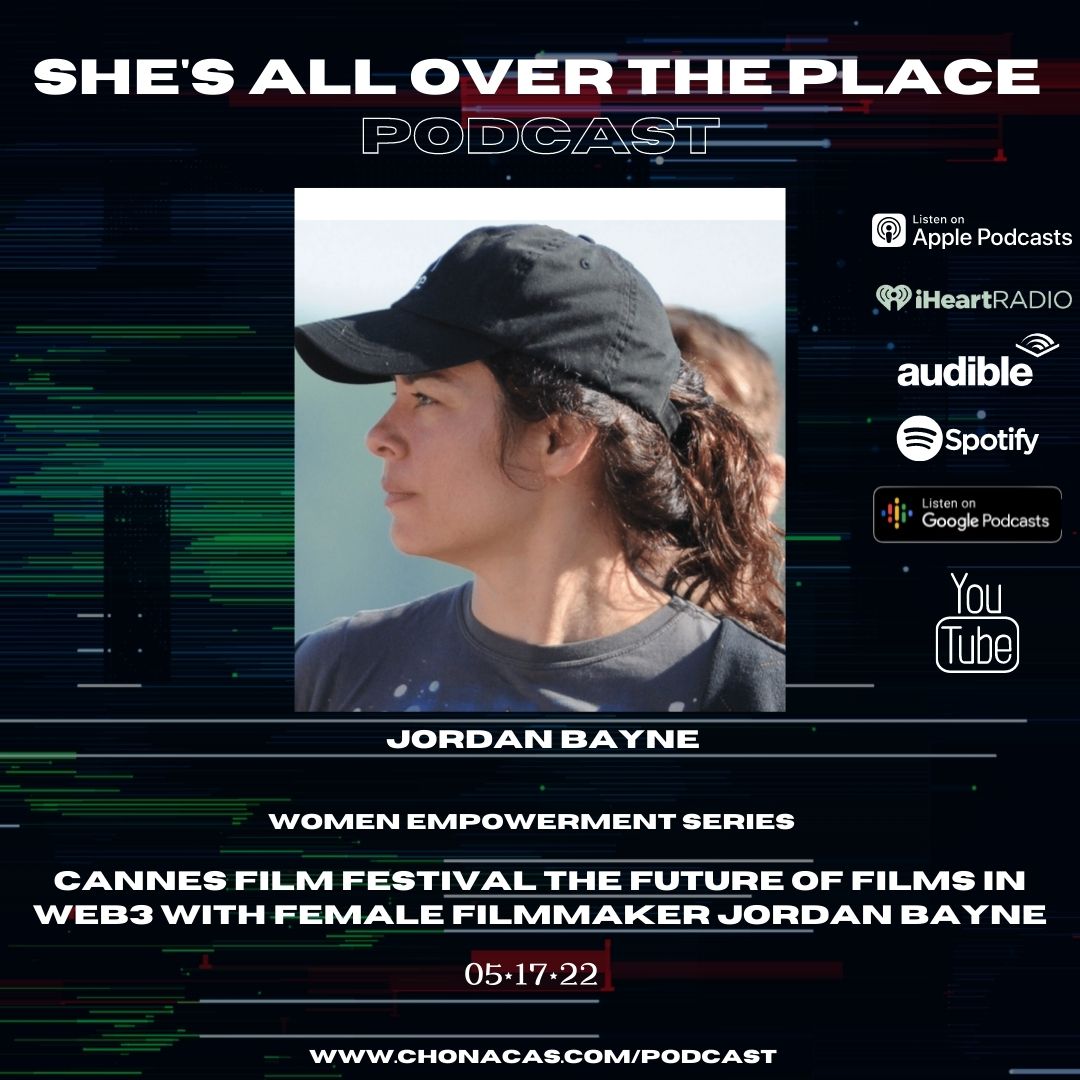
DCPS mission is to support independent artists as well as filmmakers from underserved and underrepresented communities. If you're an aspiring filmmaker, submit your projects. And if you're a film fan, join DCP and earn by reviewing DCP invites anyone and everyone to sign up and join the DCP community. Launching May 20th, 2022, you can find all the social media handles in the show notes, but here we go. We have Instagram, Twitter, Facebook and discord, Instagram decentralized underscore pitchers, Twitter DCP underscore foundation, Facebook decentralized pitchers, and you'll find the link to discord in the show notes, Jordan, how are you?
Great sound great. I'm super happy to be here with you and, and ready to dig in. This is a, this is fun topics.
Yes, yes. It's going to be a very impactful episode. So everyone take notes and, or be prepared to listen again and or share this with your fellow content creators, because that's who we are and what we stand for sharing this information with others. And so we can work together as a community and a team because for anyone who is making films and, or in productions, or even if you're just an audience member, you see you, those credits, it takes a village and we can't do it alone. Although, you know, we may want to, and we were told along the way, you know, to do it ourselves, we need each other.
We really do. And so Jordan, I appreciate you being here honoring me. I honor you I'm sharing space and to learn and grow together and make a valuable impact on our profession in Hollywood arts and entertainment. Let's go. So where are you from?
I'm originally from the smoky mountains, but that was so long ago. I feel like I really did most of my growing up in New York city. So I'm a new Yorker, really my heart and soul.
Beautiful. Beautiful. And how did you get into filmmaking?
Like a lot of people who started out as actors, there were not a lot of roles being complex roles, being written for women at the time that I was coming up, but I had the good fortune to immediately when I got to New York get, I was training, but also to get a manager and agent right off the bat. And I booked my first audition and I did a series and I got a lot of momentum up top, but all the roles were pretty much the pretty girl on the arm of the dude or all of those very, you know, non impactful roles. Right. And I was like, I don't know about you, but all the women I know are super complex and incredible and deep and profound.
And I'm not seeing this represented on, on the screen. So at some point I started writing things cause I thought, well, let me write myself something, you know, something that I can, you know, dig into. I mean, the things that I were, you know, I did go up against like Angelina Jolie for JIA and things like that, where it came down to me and her, but she was amazing.
Wait, hold the phone because yo, that movie is just, oh, oh, so Ron edgy love it. Love it. That's so cool that you were up for that role. Oh my gosh. Wow.
Yeah. That, and also boys don't cry. So I was very close to some meaty roles and both of those actually were based on true stories. And so they weren't just the women on the arm of someone, but I decided I wanted to write something for myself. But then at the moment that I wrote it, I realized I didn't want anyone else to direct it. And so then at that point I was like, but I don't know how to direct at all. And I'm a big proponent. That story is the most important thing that we serve. The story that we remove our egos and we have a job to do. And that's to tell the story the best way possible.
And I did not feel like I would be serving the story if I'd put myself in front of the camera and behind the camera at the same time without experience. So I actually auditioned, I think 500 people for a two person short that we shot on the DVX 100, I think in Joshua tree or the crew of two of us, myself in a, in a cinematographer. And, but a friend of mine introduced me to Jordanna Spiro and Jordanna, if you know her she's on Ozark right now, she had been working in Hollywood for a long time. So she was already a known actress and, but she was totally willing to come in and audition and she did the work. She didn't expect like an offer for a short film.
And so she came in and she blew me away and I was like, oh my God, you have to do this role. And so she did, and we went out there and we shot this film called Argo. And, and from there we did festivals and stuff like that. And then again, I started writing something. I was acting in a film and I was acting in a scene with Melissa Leo who was a big hero of mine and the way she came up and did indie films and the way she did complex characters. And so I was coming up, you know, still as an actress and I was doing this film with her, just a tiny scene. And I realized that I was seeing her do things.
I still didn't think really tapped into her, her talent, that she was doing a ton of stuff. Nothing was really giving her what I felt like were the kind of roles that she needed. So I wrote a film called the sea is all I know. And I wrote her and I said, Hey, I've written this for you. Would you read it? And she said, yes, your honey. You know, I mean, I don't know, you know, when about out yeah. I'll, I'll, I'll read it. And so I think it was four months went by and I, I didn't hear from her. And so I was like, you know, I didn't have a lot of hope. And then one day I got a phone call and she was like, Hey honey, this is, you know, this is Melissa and I'm on page nine and I have to do this.
And yeah, it was pretty, I remember to this day, how much I shook, you know, like, and she's like, so we got to find the right guy for me and blah, blah, blah. And so I found with her help, Peter Garrity, I met him through in New York, at a club where we, I had seen his nephew play Tim and, and Melissa's like, Peter Garrity, you have to get Peter. So I got in touch with Peter. He read it. He's like, oh my God, I've dreamed of a role like this. And so I was okay. And, and eventually, you know, we got to make that film. She got nominated for a what's it called river, got the Reed Reed Morano did the, was the DP.
I forgot the name of the film, but winter, I can't remember, but she got nominated for an Oscar and it was a super indie film. And that kind of helped us along as a short film. And then when we shot the film, she was doing an HBO show. So we were able to like utilize her on her days off, which was also super tricky, but helped with our budget. And we had a tiny, tiny, tiny, tiny, tiny, tiny budget, tiny. Like when I tell him,
Where did you
Shoot in New York? We shot in, up in the Bronx at this little place called city island. See,
You were living in New York at the time. I
Was. Yeah. Yeah, yeah.
Yeah. So real quick, because before that, with the Argo, you shot it in Joshua tree. So where are you in? Are you still living in New York at the time you just shot it in Joshua tree, correct?
Correct.
So have you, as all this time, you've been living in New York with, with everything on the timeline we're on right now with everything.
Yes.
Okay, cool. Cool.
So anyway, when, when Melissa did the fighter, we were getting ready, I think, to go to festivals and she got the Oscar and that just gave us a whole nother level of, of exposure and interest and, you know, getting into festivals, you know, and I, and I really, you know, you can watch the film now. And I think it looks like it's a classic. It looks like it was shot yesterday. It's a super relevant film and, and their performances are amazing. We went around the world with it. I mean, it, we went everywhere and, and eventually had an Oscar run with it. It was an Oscar contender itself and a Vimeo staff pick and, and, and that's, you know, was super, super exciting.
But then, but then reality hit a new reality, the reality for women and film and for, you know, more marginalized people and under the underrepresented, when you want to actually try to get a feature film made. So yeah, that's the next part of the story
Before we go there, is it okay to put in the show notes, the link to the film for people who want to check it out? Yeah,
Yeah, yeah. They can find that either on Vimeo or my website,
I'll put it in the show notes
For sure.
Great, great, cool, cool. Wow. Okay. Well you just opened up a whole can of worms. So let, let's go there. Let let's go there. Yeah. So share what you went through, how it was and let's start there, but I guess a two part question to that, or maybe you could think of long the way the similarities still today. It may be differences, right?
Yeah. So that's, you know, we're talking about exactly a decade ago and I, Melissa actually was like, you know, you need to, you need to have a feature film ready, ready to go now. So I did. And you know, they, they tell you that you're short is your calling card. But what I discovered is that that's not true. That's only true for men. And while I can point to one or two women out of that time period, that I was doing the festival circuit, who did get some opportunities, it's a completely different ball game. And so I, you know, I found that as an artist, I'm not going to lie.
It was really disheartening and very hurtful. And that's a hurtful that is not like, I think we need to be really acknowledged the kind of hurt that happens when you're not seen, or you're not valued,
Please. I feel it let's go there. Yeah. Yeah.
And so, even though I'd been, you know, with this Oscar contender and Melissa Leo had said publicly, I was one of the finest directors she'd ever worked with. I could not, no one would open a door for me and take a meeting. And meanwhile, a lot of my colleagues who, men who I adore them, you know, some of them very, very talented, not all of them, but some of them were getting meeting after meeting, after meeting on their feature films, as, you know, went on to be able to make those films. So then, then they went on, if you really want to take this to a really big idea, they were able to step-by-step make a sustainable living because then they proved themselves with that first feature film or they didn't, but it didn't matter. They didn't have to prove that they failed forward many of them, but by doing that, they could get a house or they could.
I mean, you really see the differences in careers and, and then financial stability and things like that for, for filmmakers. When you take a look down the line, if a woman's not given an opportunity or, you know, or a person of color is not being given an opportunity, they have less of an, I mean, when they're like 30 and at 35, somebody's going to have, I'll be on their second film and have a house and have some stability and maybe be able to have a retirement fund or something like that. But the woman is not. And then she might be, might be questioning whether or not she wants to have children. And that's going to put her, you know, in a different position again,
In addition to, you know, opening up on a wider spectrum, in addition to just the talent being artists and not having a business mindset or having a baseline of, of middle-class or whatever you want to call it, you know, then after self-inflicting and thinking it's them and pointing the fingers because of not having support and families with mothers and fathers and parenting that we take on the blame and shame thingy, it's us that spirals to drugs and this, and there's no education in the baseline when it's really just the nature of the business and that people don't talk about it. So I'm grateful we're having this conversation and shedding light upon light. And, you know, it's, it's a part of who we are, what we're doing. So this is really great.
Thank you.
Yeah. It's again, I go back to it, you know, there's some deep wounds that come out of that and a shame like, you know, am I not good enough? Am I not talented? You, you, it's hard not to doubt yourself along the way. I sometimes look at myself and I'm, and I say it I'm like, I have fucking guts of steel. Yeah. So I struggled with that and I'm not going to lie. It was a hard decade. It was a hard decade, hard financially decade, decade hard financially, you know, because I, I was, how are you making a living? You know? And, and, and, and I'm doing the work and the work is good. I had a, I had one screenplay that was so, I mean, I still have it.
It has to, it deserves a rewrite, but you know, the casting director was like, this is the best screenplay it's come across my desk in 30 years, she's established. And yet, and yet, and I attached a known talent to it known talent. And I was talking to Gersh for Reno packaging and all of this, and still
Domestic international foreign sales. This is a bookable known talent for domestic and international here. Yeah.
That's an American film that I had. So again, I, it's hard not to turn it in on yourself and say, what's wrong with me. And that's what I see a lot of people doing. And then you can't pay your bills and you think what's really wrong with me, but then you really believe in yourself, you know? And I go back to like, I have fucking guts of steel, like it's, but I don't think that this is the way that we, as artists deserve to live. I think we deserve more dignity and that's a big word lately. Women throwing around in our film three rooms. And in fact, tonight when I speak with CoinDesk, that's the name of it's a non fungible dignity. And so the
I'll be there,
You know, so you can have all of this talent, but there are all these gatekeepers and you can have a great script, but there are, there really were not very many opportunities. So I happened to be working in Spain and Rome and Milan a lot, especially Spain. And a lot of the people there that I got to know, my colleagues were all really working actors, like what? We would call a list here, but in Spain. And now if you take a look at Netflix, they're on all of those shows and Netflix, I mean, these are, these are my people. So I ended up writing. I ended up thinking when I was there because I was splitting my life between motherhood and Brooklyn.
I was like, I feel like when you're chasing Hollywood, and even if you've got a name attached, there's, this is a long, like, there's something wrong with this picture, right? Because you're putting the power in so many other people's hands to say yes or no, whether you can make your own project and practice your art and tell your story and connect with your audience. And then I was like, I'm gonna look at this talent around me. Like these people in Spain, these, this, these actors are some of the most talented people I've ever met in my life. And life is short, and I want to work with them because they're my friends. So I ended up packaging, another film with some of the biggest talent in Spain. I wrote it for, for them. And, you know, again, I started to hit some gatekeeping, even though I had like, like literally they're the stars of money, heist and Belviq, and you know, all these shows on Netflix,
Stop. I mean, hold the phone, hold the phone during the holidays. I marathon did all five seasons in a row. I mean, just nonstop, genius. Love that show. Wow.
Yeah. Yeah. You know, again, cut to basically 2019, I had this incredible screenplay. Again, another one that you know, was really loved and had this incredible cast attached. And once again, it was the financing. It was like, you know, it came down to, I really, really believe that it came down to woman, man, woman, man, woman, man kind of thing. So
Money, money, money, money,
Money, money, money. Who do you want to give your money to? I mean, that's the whole thing. That's, that's like one of the biggest things, right? It's like, you know, a lot of people don't mind giving money to, to CIS white men, to be really honest because they'll fail forward because they're used to that.
So that maybe that answers the question, but when you ponder and reflect, because first it's come up a couple of times, but when you ponder and reflect, you know, cause the depths of your soul, your being of who you are and the way that you think from, you know, what you were saying in the very beginning, when you had the roles and you felt like the arm candy and it wasn't any depth, like, and then you had the quality of the thought to be a, self-starter go get her to write something of your own, do something of your own through the years now. And you reflect, and you just mentioned one, but maybe some other ways of why do you think people feel safe giving the money to the masculine energy instead of you or me?
I think that we've been systemically trained, socialized that the men are the leaders, the men are better with money. The men are not emotional. We know that's not true.
Yeah.
And, and I think it's just systemic. And I think that because of that, we don't have a lot of examples other than like Ava DuVernay now. And again, she's been building for 10 years. She won Sundance in 2010 with middle of nowhere. I think it was 2010. And then she built with a re you know, and, but she also had Oprah behind her, which is incredible because she was able to get someone with some power behind her because they saw that her voice and her vision was really, really important, but now she's proven herself. Right. And so when she did queen sugar and she only hired women directors and some first time women directors and everyone went up in arms, she goes, well, you're not having any problem with game of Thrones, only hiring men directors.
So what's your problem with me only hiring women. She's like, that's just, I'm not playing that game.
Okay. And then Shonda Rhimes, she's another boss who is taking space. And so as an innovator in web three, I know we're a little, you know, just kind of pivoting, but you are innovating in the space of love three, you know, having, and we'll talk about what you're doing in that space and stuff. So that's, that's kind of cool to feel like so behind and, and not feel, you know, hurt and shamed and blamed and a decade of depression or a decade of feeling just like not heard. I just wrote something yesterday on my Twitter thing. I'm like, yo, I feel like I've been in a cocoon for a decade. Like, I just feel like, don't you feel like you just woke up? Like, I don't know about you, but I felt like, like, yo, I was so ahead of the game. And then, and then what happened?
And then I just woke up and it's like, whoa. It's like, it's like so much has changed. Like I don't care. Right. My head around like some things that are going on, but that's, you know, separately, but like being a cocoon. But though, because of pivoting into web story, you can take all that pain, her sorrow, joy, knowing the highest of the highs, knowing the lowest of your lows thus far and the highest, and then pivoting into web three with your new ethic, morals and values of who you are, what you stand for and what you collectively want to build. So yeah, I just jumped in there, but
I love that though, because I think you just, you just spoke my heart just then when you're like, I woke up, I was ahead of the game I woke up and what just happened to this decade and that's the way I feel coming out of the sea is all I know, because I really thought with when you have an Oscar contender like this and you know what happened, like what happened? And it wasn't, you know, not while I was in it, when I was in it, it was the shame. It was the pain. Now I look back and I understand now and understand the business and that as much as I wanted to be someone who changed the business and change that business model, you know, I didn't, I wasn't equipped then. And then I needed people like Ava DuVernay to come in.
I needed people like all my to come through and to be game-changers. And each of them had someone very significant behind them, help them elevate them so that they could get their vision out there. And, and we have to see it. Right. We talk about how important representation is. So it's not just important for women or LGBTQ or people of color or, you know, whatever those marginalized communities are. It is absolutely vital that we can see it so that we know that we can be it. Right. And so, you know what, I look at what I'm doing in webs three. I founded the NFT film squad in February, 2021, and now I'd been in crypto and I knew that blockchain was powerful, but it wasn't until I understood the NST, I got schooled on NFTs and clubhouse by a couple of really great leaders and community builders.
And it clicked for me that this was going to be a game changer for filmmakers, if they could wrap their head around this. And this was, you know, three months before board ape yacht club came out. So I thought this is going to be an amazing opportunity at that moment. I was thinking more on minting on the blockchain, right. But I wanted to know and I wanted to learn. And so I started a weekly thing on Wednesdays where I started in clubhouse and it was like the NFT film squad, you know? And it started at that point, I'd asked for women, cause I started a room earlier called elevating women in the NFT space. And it was so needed that literally those rooms had, like, I, I think my rooms had 1300 people in them every Saturday.
It was nuts because women, women needed a place to speak that they weren't being trampled over on those clubhouse stages early back in the early days, which was only so ironically I started with four women who kept showing up four amazing women. And, and then eventually we discovered David Biyanki, they would be hunky and mentored on the blockchain, a a really spoken word. He calls it, spin them off a spoken word, poetry piece. And so we brought him in and we just spotlight in him. And then we discovered me out there, like just scouring Twitter and every place for any, any semblance of a filmmaker in this ecosystem found Jay Harry Edmondson.
And he has a beautiful, super cinematic pieces that are now unknown origin, you know, but they weren't like, it was like shot with Cooke lenses. I mean, I'm a, you know, I can get super nerdy on this
Zig and nerdy, but before we get super nerdy, I just want to honor cause it's happened a couple of times. So the person tuning in and what I keep sharply seeing in a delicate way is that you have these ideas, like you, like just a coin. One is you, when you got on the clubhouse and you had the idea of what was needed or something that you wanted more and that other people could identify with, and then you started something, you took action and you started something you're as a creator, it's our duty as a human to burst into create it's the gifts. And you take action instead of just like wandering and looking for a room or hoping it'll happen. You take action. So person tuning in, like when the idea comes to actually like start messy and like you said, grab another person or two, or do it yourself, but make it happen.
Like you take the actions. I just want to honor you and just hold on that moment because it's a very impactful and powerful because people are listening in them, they're spiraling and they don't know where to start. You start with taking action one step at a time,
For sure. You have to pick up a camera, go out and do it, or, you know, give yourself, take a breath. How do I want to do it? But start the engine, get the engine going.
Yeah. Or even, or let's nerd out for a minute or even start researching the different technologies of cameras and lenses we can use like star there and then it'll lead you to the next interesting thought to research.
Absolutely. Absolutely.
Yeah. So you're saying you're about to get a little techie.
So how has getting techie? Cause I love Cooke lenses and you know, what he shot was really beautiful. And then it was like, okay, well we're, we're, we're struggling with limitations within NFTs and the platforms and what platform is going to be there for a filmmaker. And we're talking now it's may not, no, it's not may, it's almost may, but basically a year ago. Right. And there was still no platforms that could really handle the file size. So these were things, you know, and more and more filmmakers are coming into the room and, you know, little by little, by little, it was very, it took a long time to get to where we are today. And I do want to like, you know, take what has been a year long process and really sort of fast forward it to where we are because, you know, I knew I had a hard drive full of things that I could probably meant on the blockchain and that would be cool.
But I also knew that as I felt like as a leader and what I could see and what I wanted again, I'm going to go back to those two women, Ava with array and Alma were free, the work really disrupting and changing something and creating a better future for filmmakers so that they didn't have that pain and shame coming up. And so that they could get their voices heard. And you know, again, we were all thinking minting and we needed to do a case study and things like that. You know, I D I wasn't sure what it was going to look like about, you know, funding for a feature film or distribution for a feature film or any of this that we're now so deeply into and talking about.
So that time, you know, I knew that I had not seen a full story. Like I didn't see, I had not seen something on the blockchain that was super cinematic that had a beginning, middle and an end, but I did know that there were major limitations that I had to lean into. So if you think that we shoot in 4k and getting ready, I'm nerding out again. So we shouldn't 4k, right? And you want to shoot, especially if you have a particular style and a voice that you want heard, then you know, that you don't want to lose that cinematic experience for the people, but yet you're shooting 4k. And at that time open C, which is the biggest platform was only offering a 50 megabyte limit 50, but fortunately by the time and, and, and all of them super rare, still the same, I think it's got awful known origin, you know, maker's place.
None of them were ready for filmmakers, but Zuora was a protocol that was really interesting. And they have this woman Latasha. And if you can get her, you should try to get her on, on your show. But Tasha was doing music videos. She was a hip hop. So she had a following. She became like Zora's social person. And she was dropping also her music videos there. And so they had a 500 megabytes. Okay. 5,500 still 4k. How are you going to make that look good?
Yeah. And not to go, not to pivot here, but what currency is that on?
Got
It. Okay.
The theory and blockchain. All right. So that's another thing, you know, I've been in crypto a long time, and while I appreciate polygon and Matic, it's hard to bridge there while I appreciate Tezos. There's not really for what I wanted and what I felt. I wanted my very first piece, at least my Genesis piece to be on the Ethereum blockchain on the, of blockchains as far as
Well, auction houses. Christie's, Sotheby's open sea as of now, is that hub?
Yeah, pretty much. I mean,
That's where I put my first. That's where I mentioned I was the first artist to put a love poem on the blockchain when I'm into my first piece of early 2001 2021. So yeah. So the creme Dela crumb space right now, what I say,
2001,
Yeah, 2001,
2021, 2001. You are way ahead of us.
There you go. There you go. So open seat and for the person tuning in the Genesis piece is called red flags.
Yes. So the Genesis piece is called red flags that I knew I had to make it short. And I knew that I also knew that I was again on a shoestring budget because here we are now that at this point, when I started, when I wrote this in August and I shot this in September, we still had a funding issue. It wasn't like I could just go out there and, you know, ask everyone to buy my NFTs and fund a short film because no one was paying attention to NFT films at that point. So I knew I needed a budget because I needed to pay people and I was not going to not pay people because I just can't be a part of that. And, you know, and it's a big thing, like why,
Yeah,
Exactly.
It's
Too painful
Where it's like fun where we're just having fun. Like, let's get together after dinner with mom and dad, like, we're, you know, young adults here, we're creators. And we, like you said, dignity, we need to be fed and paid period. It's a talent, it's a service. It's a career. It's time, energy. And that's the currency. It's the number one currency. Totally. And the number one currency,
Totally. I had a shoe string budget once again, but a great cinematographer that, that really, really works hard to respect my vision and to capture it. I had the most amazing actors and actress, Gabriel Ferman, who was an friend of mine. I asked him if he would do the parks, I knew I needed someone who could bring me both the, the fury and the fragility of this toxic masculinity. And then I found this actress. I was looking, looking, looking, I knew I needed a black actress because I, because the song that it was a song that I wanted to shoot and make it more of a narrative, you know, motion picture, not a music video, right.
Is a very talented, young black woman, Aliyah Sheffield. And I didn't want, it was very important not to erase her, her voice. Right. So very specifically I needed to find a black actress and I auditioned again, a lot of people and I could not find what I needed. Like there was a particular quality I was looking for. And I, one day I was thinking nerding out about cameras again, and DPS and I thought about this DP. And I went to see, he had done Jay Z smiles and he'd shot that. And I was just checking it out and suddenly this actress, and I was like, oh my God, that's her, that's her.
I, I don't know who she is, but I have to find her. And so I did, I found her, her info online and I wrote her. And I said, you have no idea who I am, but let me just pray. I promise you I'm legitimate. Here's some, you can check up these things on me, but I would really like to talk to you about a project. And I did not addition her. I got on a zoom with her and I had a conversation because I know what I want and I can see it and feel it. And someone just by a conversation and she had everything, you know, it was a big emotional journey. She had to go on. If you watch red flags, it's, you know, it's about the deconstruction of a toxic relationship and, and breaking those cycles.
And, and it required a lot of her required so much from her. And she showed up and she delivered, and it was, it was astounding to watch the two of them work. I felt like the most fortunate artists in the world director in the world to be working with the cinematographer and these two actors and the whole crew. I had the most amazing crew.
I'm sure she feels the same way. Cause I mean, I just know, as, as an artist personally, and, and anyone who's tuning in okay. Cause I'm very cautious of, you know, their spams and risk and bots. So it's like, okay, there is possibility for someone great, like you to come along and offer something amazing that could be authentic and beautiful and be magnificent more than we'll ever know because that person is probably now on the blockchain, but didn't know a probably didn't even know about the blockchain and now is going to go down in history of, you know, being alleged of being one of the very first projects as an actor on the blockchain. And, you know, I mean, it's just like, it's so beautiful how the universe shows up for us and these things unfold in unexpected ways.
And yeah. Shout out to the crew, got to love the crew.
They're beautiful. Lucky.
And how many days did it take to shoot
One?
Wow. One day, good job.
I'm big on pre-production, I'm big on having a tight pre-production and being prepared for something to go wrong. We had a monsoon there at the end and we packed out in a monsoon on a one-way street in New York city, you know, with double parked where we kept having to move the truck in the middle of a month, you know, because cars would be backing, you know, it was, but that was at the end of the day and we'd gotten our day. And so,
And when was the shoot day,
We shot in September, end of September. And then I didn't drop until January because again, going back to file sizes and things like that, color correction really important to me, if you, you know, you saw the films, you know, there's a very particular stylistically, very particular use of light and dark, especially, you know, really leaning into the dark and the darkness of what it's like to be in a toxic relationship. And then the revelation that she's particularly having in this, in this moment, as, as again, we see them in the light and we see them, her and her, both of them in their darkness and their dark moments. And then, you know, and then it does resolve.
So in a beginning, middle and an end. So yeah, it took us one day and then post took a long time because I ended up color correcting, I edited and then I color corrected. And then we had to figure out how to make sure that it didn't lose its cinematic quality when it got compressed down for, for Zuora.
Yeah. I've been in a lot of Twitter spaces and that's been a big topic about, you know, the anticipation of filmmakers of a dumbing down the quality and losing the color, the pigmentation, those things are so important for the artistry and for the movement, like you said, it was the lighting in the shadows before we continue just on a psychological level for like brush strokes. I just kind of want to clock these things like clubhouse early 20, 21, started a room with the collective spaces where there do your own research. Everyone's sharing stories, kind of being like, you know, the scientists, like you said, a lot of pre-production. This is like kind of like feeling it out, getting a feel like getting some legs, sewing seeds, growing some legs, understanding the foundation. And then maybe nine months later, inaction are less than nine months of inaction because you must, if you did a lot of pre production based on the short film.
So if you were in it first since the beginning of 2021, then somewhere along the line, you did your diligence for pre-production finding the talent, auditioning everyone, shooting it in one day in September. And then October, November, December dropping it January the end of January on the 26th, 2022. And, and then, but you started the film squad though at the beginning of 2001. So you already had
- What did I say?
- I know you want to go on the space Odyssey to that level.
So what he said he wanted, so he told you, so yeah. So it's like you planted something, you, it sounds like to me, I'm a visual person. You put this clear shield, like an egg over it of a community of being like this mother womb or this incubator for like other people with this exceptional foresight. And then while you're being this vessel, learning it, then, you know, taking it to Twitter spaces, things like that. You're going to do the drop. So you're already having the spaces you're already having the community, tell the people who are interested, okay. Like, you know, healthy communicators, the marketing, social media, all that in an organic way of showing up in spaces and how to connect with people, to do spaces, to share and care and bump things.
You learned a lot of all along the way not to do. And then some maybe nuggets along the way. So people can be sovereign beings in webs, three taking actionable steps to do this, but not feeling like they're isolated alone, FOMO of web two of no, one's going to help me. I have to pay all this money for marketing and blah, blah, blah, all that stuff. Let's just hack into all of that. That's cool.
Yeah, let's do that. And then I want to bring us up to date to where we're, how fast this has moved and to film three from my drop in January to where we are today is incredible. That's a really great question. The marketing, when no one was making noise about NFT films in January, at that point, by the time I was starting, I rolled out, you know, myself, I figured out a marketing plan based on what I had seen with a lot of the other PFP projects that were being dropped. And I had made great friendships with Sheila Darcy and Trisha Retta, and gosh, so many other people Charmaine and Ash Cooper, Kerns and Charmaine Hussein and Ash Cooper occurrence.
And I just, we had really, as women been trying to like make sure that our voices were heard. So when it came time to do this marketing, I knew one that there was a mental health element to this that I really wanted to touch on like that this is really a social impact piece. And that I wanted to dig into those conversations. I didn't want to just be like, oh, Hey, I've got a film go out and, you know, go out and become its collector. I wanted to talk about why it was historically significant, why it was mentally and emotionally significant and about the mental health issues that surround domestic violence and intimate partner violence. So I reached out to Sheila Darcy for that one.
And so we did that drop party. And then, you know, I also knew that I wanted to talk about why people, don't, why it was a problematic film for many people, why it was controversial. And it's because it's, you know, if you remember, I, I do put a warning up at the front of it because there is, you know, for some who may not be used to watching euphoria or may not be used to watching some of these things, it can be very triggering. So I wanted to talk about also, you know, when people, it, cause it was, it had some controversial feedback, but I, you know, I had thought a lot about like taxi driver and things like that. And as Cooper currents had done, like her studies on
Love, her, love, her, love her, by the way, I love her that out in the sketch poetic, we love yell all of you.
Yes. So I knew that she had, she told me she had done a study on this in school and she, so it was a perfect opportunity to talk about film as controversial as activism in a way, you know, why these stories need to be told and why they're important stories. So we did that room. So this was all a part of the marketing. I knew that there were several conversations that needed to be had around this film because it checked a lot of boxes. It wasn't just a music video that just entertained people really checked a lot of boxes. So we Mar we did. I mean, the marketing is probably the hardest part was really showing up, showing up and showing up and showing up on Twitter, on Twitter and discords and spaces and clubhouse and talking and talking and talking just to, cause nobody was talking about in a T film, then
No matter if it was two people, three people who showed up to the conversation or 300 or 3000, it's the quality and the ripple effects of the impact. So is that correct?
For sure. Yeah. I mean, it w it was, you know, I learned this as an actor. If you have one person show up for your little black box theater, you've got a one person audience and they felt they're bringing you value. Right. And so it's an honor to do your performance for one person. So for me, you know, just to have a few people come into a room, if that happens, they are there. And for some reason they believe that they're going to get value. And so it's an honor to have that conversation. Yeah.
It's important for the person tuning in and why I really wanted to break that down because, you know, they're thinking the macro, the millions and the social media, it's like get there quick. And it's like, one person is the ripple effect and adds the value and brings you that joy. And that's exactly perfect full circle. Thank you. Any, any other thoughts on that? Because I definitely want to jump into innovation and the speed of any other exciting things.
Sure. I think that this space moves really fast. And I think you have to take a lot of care that you don't fall off. If you don't know, FOMO is that's fear of missing out and that you, that you don't turn in on yourself, like, let's say you meant something, but you're not lucky. Like I had a very important collector the day that I meant it. And she's, she's a legend and the NFT space, her name is Claire silver. And she, she was at Christie's and she, you know, sold at Christie's and things like that. And she saw the value in what a, this historic piece plus the story. So I'm really, really lucky, right. But there are a lot of people that are mentoring and, you know, and they're not getting their collector immediately. And so if you're actually mentoring something, I think you just have to be patient.
And the other thing that's really key in web three, and it's the truly, the web three ethos is community communities, everything. And, and it's really what you give. It's not what you take. So, and this is something I started to think called the lab, New York in 2010, which was an IRL in real life lab for actors and writers and directors. And we would meet in my Brooklyn loft. And then I, we had it once a week. We also had it in motherhood once a week. And Roman once a week, I had expanded because the ethos was community. You know, if you come in and give, you know, the idea of being that a rising tide floats all boats, right? Or the idea of being, if you want to go far, you go together.
If you want to go fast, you go alone. So, and I think that, you know, when the web three is we, we want to go far together and it's really community oriented. And so again, you know, I, I'm gonna throw it right back out to sketch poetic again, she gives to community, and that's why people feel seen and heard by her. And so if you're coming into the space and you don't have a community yet find a community, and that's where the entity film squad is really great. You know, because the core ethos of the squad is not one project. The squad is there as the community, as the hub, as the central spot for all the film projects, whether they're flinch, the film franchise or Miguel , or you know, or who, whoever comes in our mission is to make sure that we provide as much of the accurate information that we have.
Each other's backs that we support each other, that we celebrate each other, you know, and, and help people figure out and trailblaze this ecosystem together. So if you don't have a community, you don't come with a built-in one, find one, find a community that you really connect with
1000 real quick. So with your film, red flags, did you use web to money like U S dollar? Did you raise crypto?
Actually, I got crypto and then I converted it. So it was given to me the executive producer. She had gotten her name's Margaret Corvid. She's amazing. She'd gotten,
Thanks, Margaret. We appreciate you.
We do. And she's brilliant. She's a brilliant artist herself. And she had gotten fortunate in that when Twitter dropped their NFTs for free the airdropped him to a few people, she got one, and she literally flipped that the next day for, I think ease at that point was around $2,000. So she flipped it for 50 eats and that gave her some money to work with and she wanted to pay, she wanted to pay it forward because that's it that Steve dose,
What you just said, and you, you said it clearly, but just in an another way, but the same way, reinvesting art with art, the crypto, and then she, she had the gift, she paid it forward, she earned some, and then she took a piece of the pie and paid it forward through you and then, and the beat goes on.
Yeah, exactly. And I think it's an important part of the story, you know, for sure. Yeah. So she sent crypto and then I converted that to Fiat, which we needed to, to pay our vendors and things like that in New York and people pay their rent. So, yeah.
Wonderful. Thank you for sharing everything at you're you're such a blessing. So let's take a deep breath and focus in on innovation. What's up next. And you're speaking at the con film festival coming up shortly here. So spill it. Let's let's hear the Jews, the crypto of Hollywood juice.
I think the most important thing to know right now is what's happened between January and today in the film three vertical. Really it's a vertical. We are, we are creating a new vertical and film when Julia Pachino interred with her with keepers of the end in January and sold out as the very first. And there is nobody else. Everyone keeps calling themselves the first and I keep trolling them on Twitter. The blockchain doesn't lie. Julie Pacino's keepers of the end was the first feature film, fully funded by NFTs. Yeah.
And she, it sold out in less than 30 minutes. I was there for it. Like I,
No, I didn't. I got to tell you not enough. She did it in the
Photo. She took it. The Madonna Inn.
Yeah. I didn't. She said, cause I've, you know, we shared stages so many times I know her story.
It
Actually started in December and had a very slow start and then something happened. I can't remember what happened in January and maybe, but something happened then probably it sold out really quickly. Yeah.
Like a Twitter spaces or something. But like everything went like it. I was, I remember the heat of it all. Like everything going real, like in, in like what? And they're like, oh, 30 minutes or less than 30 minutes, everything was gone.
That's probably true. Yeah. Somebody somewhere, somehow she got some exposure and it, boom.
Right. So, but that's how it happens. So anyone tuning in that can happen for you, if you could add 10 collections, maybe nothing sells for like a year or two, but then you're in one Twitter space and everything sells out.
Totally. That's what I, yeah. Harking back to what I was saying before about being patient, you know, if you don't, if you meant and you don't sell immediately. So from that moment, then Miguel Fouse entered and with Kaia Dita and Miguel is a Spanish filmmaker. So this is the first European film funded by NFTs. He's almost fully funded now. And what he's done really brilliantly is he's cross Pollenizer. So he's a member of punks and a member of board abs and a few of these communities. So he was really able to get them interested. And then really literally in January, end of January, all of February, Miguel, Julia and I were on all of these panels together because suddenly there was this incredible movement, not just doing meant on a blockchain and get a collector, you know, do we do additions?
Do we do one-on-ones? Where do we price them? We can fund feature films.
Yeah. Wow.
Yeah. With a, with an innovative use. Now you gotta, you can't just it's this is not Kickstarter. This is utility. This is what are you giving your, what are you giving your community? You know, why should they buy your NFT to help you fund your film? What, how is this a win-win situation for both of you and a symbiotic, you know, a constant. So this really blew my mind. It was like, I think it was January that I, I interviewed Julie and it was like, I suddenly clicked for me again, I've been doing this every week and basically daily obsessed with this since February before.
So this is like in my 11th months in this and this, this space moves like Lightspeed. So since that time suddenly there's been a real, incredible growth spurt of, you know, with blockbuster Dow coming in with, with Tassa toss, feelers, you know, white paper that he wrote in December and throughout there, and suddenly got this incredible momentum. And then with beam and the way beam is a streaming services is rising up to the occasion for web three filmmakers. It's insane that the behind the scenes of what we're doing with, you know, with Cameron van Hoyt and flinch and, and all these different projects coming in a de-centralized pictures coming in, you know, they go back to Zoe trope.
I mean, that's the Coppola's, they've got a very interesting model. So
They're my new sponsor actually
DCP.
Oh my God.
Yeah. Oh, they're great. They're great. Leo's great of DCP pictures, decentralized pictures.
That's very, that's very cool. Small world. Shout out. Yeah. So a couple of exciting questions. So it, Miguel that you mentioned, you must have posted something because I definitely follow him as of a few weeks ago because of something you posted. So that was cool for you to shed a little light on who he is and what he's doing in the space. It's just a brush stroke. And then also, cause we kind ran past the Julie Park. I remember like a few months ago it was, the funds were going to be used for her feature film that was going to be shooting in June. Is it still scheduled for June or is the date moved
September? Both of them are now scheduled for September. The cool thing Julia is doing is something that I would find very difficult is that she's literally taking, you know, taking her screenplays to her community and saying, okay, give me input. What do you, what do you want to see? And I'm like, yeah, I don't think I can do that. But you know, she's inviting the community in that way, you know, which is super cool. Miguel, on the other hand, he already had his screenplay done. And so he's inviting his community in a different way. Miguel, you know, he ha he runs our Monday with Miguel that squads Monday with Miguel spaces. So Miguel and I are super close. We're speaking, we're both speaking at can on two panels together.
And, and he's a really, he really contains the ethos of the web three space, which is, he's not just about his project. He's gonna open source his project and wow. He's about community as well. Right? So he's really lifting up communities, lifting of women like crazy. Both of them are amazing
International talent and humans as well. I love that. I'm just having some foresight of the column film festival this may, and then only imagining the busy-ness of next year and how many speakers there's going to be. So as a fellow filmmaker, I'm sure you already have it on lock of a DP shooting the, the epic moments, because you're going to be the first of the first of the first to speak at the international comm film festival of blockchain, NFTs and filmmaking. So congratulations to you. Congratulations.
Yeah. Thank you. It's going to be, I think again, we're going to see a massive shift coming out of con I think we're gonna see the NFT film three space just explode coming out of the festival because more and more people are looking at ways that they can fund. And also, you know, we are, we're really exploring distribution options as well as web three and hybrid options between web two and web three. And these are the conversations that we have basically every day through the squad and in our discord. And then also just what the, what I call my council, those of us who are really leading this, we talk daily on all of this stuff and, you know, just making sure that constantly what's best for the community.
What's going to be best for the future of film, you know, and stuff like that. So it's, it's pretty insane. What's going on. I mean, again, flinch film franchises is amazing. They're great trailblazers as well, and I'm waiting for some more women to, to come up in the ranks. You know,
I'm here for it. I'm showing up I'm right here and let's is onboard. And I agree with you is really exciting. I know the woman from crash, Jennifer
Esposito.
Okay. She must be Greek something because I went to her Instagram before, and there's a lot of Greeks when she was production doing something. I saw just a lot of Greeks. I'm like, yo, is she Greek? But my, you know, saw that my friends saw that he sold three NFTs to raise funds for her film. So,
So,
You know, for the person tuning in like creative ways, like definitely jump into film squad into the Twitter spaces, into the rooms to learn, brainstorm, get ideas. And, you know, you're definitely an innovator and, and taking action and, you know, people tuning in, they can be too as well, but you know, maybe some people are here for the entertainment just to learn and be a part of it, be a part of the journey and the ride. So if you don't have to go from zero to hero and take so many big actionable steps, like just, you know, being interested involved in sharing and growing and learning together as a part of it, like you said, like grow together, you know, so we don't need to go so fast and, you know, put exact on things because it's just, it's bursting and it's brand new and it's being created.
And that's just so beautiful,
The freedom and the dignity that you get as an artist being an, a web three or film three is as we're calling this part of the ecosystem and that's exciting part, you know, ownership of your own IP and not having gatekeepers, you know, to just bring this back, a circling back around to the pain and shame and those kinds of things that we started talking about. I think that we have a great opportunity now to make sure that artists are valued and given their dignity and can find their community, that thousand thousand believers or a hundred believers that want to make sure that their voice gets out there and really gets behind you, you know, on whatever you were doing.
Right. So whatever, you know, you decide to like put out there without that shame and without the questioning and the doubting that comes from someone who's basically says to you, no, we don't value you or your voice because it's not the voice that we want to hear. I think that there's is a major game changer. And I think that where the beauty is, I think we're creating a better world in general for people decentralized, you know, like that. Yeah.
For example, like look at our world and our industry. And I mean, without love three, you know, I don't know if I would have ever been connected with you, you know? And so webs three, the psychology of it and the, the innovators and the entertainers and the people who are the yes. People and who are, are wanting to fight and be a part of all those things, beautiful words you just mentioned, it's for us to come together and find one another, you know, it's an opportunity, unlike finally, you know, it's like, I've been waiting for this my whole life, you know?
Yes, yes. I've been waiting for this moment, my whole life. And I know that in can, you know, it's going to be a big moment for the NFC film squad, but I also know that I'm going to be, you know, my feature film is coming. And the one that I told you about, about, I actually am going to do a different one. That's got a smaller budget, that's more accessible. I have my, you know, my talent. And for the first time in my life, I am absolutely 100% sure that I will be making this film. I will be making it on the timeline that I want as an artist, not waiting on some gatekeeper to tell me when I'm going to make this film, you know, not waiting like and watching part of the deal fall through. I absolutely am certain that depending on when I roll out my NFT strategy for my feature film, like Julie's, and Miguel's similar with its own utility, that that my film will be funded.
And I will be on that timeline of pre production or development, pre production and production and post the one that I want, the one that's right for me as an artist. And that's what we want for everybody.
Congratulations. And I will be here for it. And I will love to invite you to be on she's all over the place. Pod can have a conversation about it
Would be amazing. Thank you.
My pleasure.
This was fun.
It's a part of it. And I appreciate your, your words, speaking of words, and wow, this is going to be the longest podcast all the season, probably, but speaking of words, are there any last words you would like to say to anyone's who in your words have already been amazing, but any last words before we wrap up and roll out
That I'm grateful, I'm grateful that, you know, a lot of the journey has led to this moment. I think we know this about all of our lives, where if a door gets slammed, sometimes for someone like me and I'm super stubborn, it has to be slammed so hard that it practically knocks me out for me to notice that I need to pivot. And I think that we're an extraordinary time. I think that today, I, you know, Cameron said that for him, it's, it's not sense. You know, talkies came in to film. And for me, I feel like it's when we got the DVD 100 MedX 100 and we got a camera in our hands that we started to get the power back. I believe that we're at the moment as artists and filmmakers, that we really can stand in our own power.
We can really stand in our own power. And that's amazing. This is an amazing moment. So I encourage everyone to, you know, don't be afraid, jump in, ask questions. You can of find a generous and kind community. It's the most generous and kind community I've ever met in my entire life. There's the web.
Yeah, definitely. Definitely. And you know, it'll and everyone who listens to the podcast, I created a pink sheet around six months ago. So, you know, just all, all the people that Jordan mentioned, definitely, you know, it'll be on the pink sheet and, you know, you can have that, just put your email into my website, dot com and we'll make that happen for you. A lot of things we talked about today will be in the show notes. And with that being said, cut, that is a wrap. Thank you, Jordan so much for being here on she's all over the place.
This was awesome. Really great. Can't wait to do it again.
Yes, yes. Okay. We'll see you next week. Thank you so much for joining us. We'll see you next time over and out.
Check out the She’s All Over The Place Podcast! https://www.chonacas.com/podcast/
Dreamland 1111 Album – https://distrokid.com/hyperfollow/saintkyriaki/dreamland-1111
Dreamland 1111 Merch – https://www.redbubble.com/shop/ap/93662139?asc=u
Saint Kyriaki – Miracles go to Marz (Official Music Video) – https://youtu.be/XjZDlwNU0Ac
Saint Kyriaki – Dreamland 1111 (Official Music Video) – https://youtu.be/9IjNGcgVCmI
Katie’s “A Lover’s Fairytale” poetry book on Love
Website: https://www.aloversfairytale.com
Buy the book: http://bit.ly/amzn-ALFTbook
Buy merch here: http://bit.ly/ALFT-merch
Katie Chonacas Socials
Tiktok: https://www.tiktok.com/@chonacas
Spotify: https://open.spotify.com/artist/2iTpKMr57KoIqdp92xLQb7?si=5Hi9uIcnSxe05XrpNtDL8w
LinkedIn: https://www.linkedin.com/in/katiechonacas/
Facebook: https://www.facebook.com/KyriakiChonacas
Instagram: https://www.instagram.com/chonacas/
Twitter: https://twitter.com/katiechonacas
Patreon: https://www.patreon.com/chonacas
Youtube: https://bit.ly/youtube-KatieChonacas
IMDB: https://imdb.to/3b2OQG3
OpenSea NFT Artist: https://opensea.io/chonacas