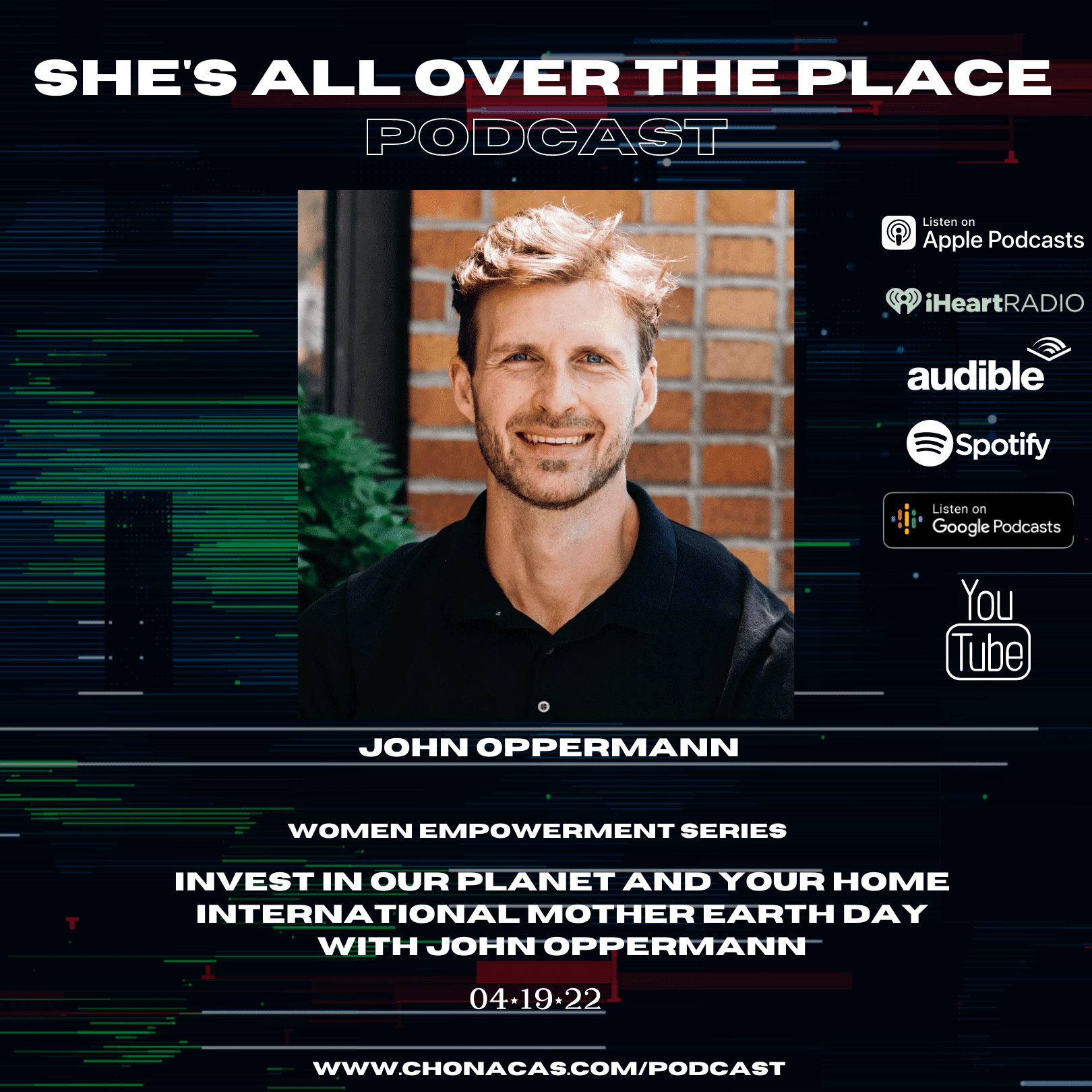
John manages earth day initiatives activities from its large scale annual earth day events to its year round programs, including this past year's earth day 50 virtual events featuring bill Nye, Al gore, climate scientists and activists.
He hosts the organizations parts per million podcast. John also a sustainable home specialist has a real estate brokerage practice that focuses on healthy green homes. He has taught a course titled marketing green homes at NYU. Whew focuses on how we can market the economic health and wellness and sustainability benefits of greener and healthier homes. Ladies, this one's for you. John has been featured as an expert on sustainability topics by a variety of media outlets, including the guardian MSNBC, the Washington post, and the New York times. John graduated with a BS in international politics from Georgetown university school of foreign service and a JD from Harvard law school major.
This is so awesome. I am so excited to have John on. Thank you so much for joining me, John. How are you? I'm
Good. Thank you for having me excited to chat today.
Yeah, my pleasure. Awesome. So let's just dive right in. What is earth day initiative?
So earth day initiative written non-profit environmental organization, and we've been around for many decades. And our goal is really to bring that spirit of the first earth day in 1970 and to the 21st century. So that first earth day 20 million people took part in that first earth day in 1970, which is an insane number of people. If you think about that was 10% of the population of America at the time. And I can't think of any event that in its first year, 10% of the entire country turns out for. And it's because people were really eager to move things in a positive direction on our environmental challenges. And very quickly after that, we saw real change in government and in business. And there was a lot of momentum moving forward to what we do every year as me sort of channel that energy that comes with earth day and connect people to all of the things that they can do in their own lives and their own communities.
People are really eager that one time a year, especially even non environmentalist, kind of turn out and want to do something that has a positive impact. And that's a real entry point for us to say, yes, that's great that you're excited to do something. Here are some things that you can do, and here's how we can connect you to making real positive change throughout the year. So then we also have a variety of programs like a sustainable food education program, a green buildings publication. We have a podcast called the parts per million podcast, where we talk about what you can do in your own life and make a positive impact. So all this stuff that we do throughout the year to kind of bring that first day enthusiasm throughout the year.
I love that that's wonderful, so people can tune in and they can be a part by just going to the website and everything will be in the show notes below, and then people can tune into the podcast to hear more too. That's really, really exciting. Thank you. That's so cool. And then where are we at exactly with action on climate change?
Yeah, I have mixed feelings. Like I think most people in the environmental community and the climate community about where we're at and dealing with climate change. On the one hand, we have seen so much enthusiasm around climate action in recent years, more than we've ever seen, really. And for instance, with the global climate strikes, Gretta timbered, the real youth climate movement that has sprung up in the last couple of years with people turning out, showing up in the streets, raising their voice, protesting, contacting elected leaders, contacting business leaders, really trying to move things in a positive direction.
The momentum is greater than I think we've ever seen. So that's great. It's sort of an optimistic look at where we're going on the other hand, not really done a lot in recent decades to address climate change. And it's been very slow going. The us has really dragged its feet. A lot of countries around the world have dragged their feet and it's been a challenge to get a concerted unified effort to address climate change. And the IPC just recently came out with its latest report. That's the sort of UN governmental panel on climate change. They came out with their recent report that captured headlines around the world that was really raising the alarm to secretary general of the UN said, it's code red for humanity, basically that if we don't act now, it's pretty much an hour and ever.
And I think we do have, like I said, this moment where there's a real opportunity with the new administration in the white house, we have people in government that really do want to move things in a positive direction. There's hundreds of businesses that want to move things in the positive direction. The general population seven out of 10 people want ambitious climate action. So the momentum is there. The ambition is there, but there's still a lot of roadblocks. And I think it's worrying to see that even the things that do get proposed get watered down. So where we go for the rest of this year and then with the upcoming climate summit and November, it's still an open question.
And I do worry a bit too. And looking at the world's response to COVID, I don't think we had a great track record with COVID. I think it was a bit chaotic. I think people didn't really the things that we needed to do. So then we've just had this burning fire of COVID for the last 18 months that has gone pretty much out of control. We've sort of put out that fire at the margins, but I don't think that we have really, I wouldn't give us a great grade. I wouldn't give us an a or even a B maybe not even a C in terms of addressing COVID. And I think if that's any indication of how we're going to deal with climate change, then we're in trouble. So I would give us a mixed bag in terms of there's a lot of opportunity there.
Hasn't been a lot of reality and addressing climate change.
Okay, thank you. And then specifically honing in for mother earth. What can we do as activists being humans and the environment and what are actionable steps that we can take and then honing in a little, even more from what I seen in read, and then, you know, I gathered from, I just want to give credit to real simple and Mia Taylor, she published an article on May 28th, and I'm going to have it in the show notes. And she was specifically speaking in the article about if you want to take actions for the environment, you know, not, I don't want to say small stuff, like fast fashion and, you know, straws like taking away the straws.
Those are all very important. And I saw right. And what can we do for the environment? But they're talking about the banking system and how we can make smarter choices about where we're putting our money. So can you share how that can help the environment and actionable steps that we can do?
Yeah, so there's a lot that we can do and our own lives. And typically the most impactful thing that you can do is try to tap into the larger systemic changes that we need. So one of the big challenges with environmental issues is no one feels like their own individual actions have an impact. The challenges are so great. They are so enormous. You want to make a positive impact, but you just feel like you're a small drop in this wider ocean of these environmental problems. So what we typically try to advise people to do is have that personal impact because it is important. It's like voting where it's like, you could say the same thing about voting where it's like, oh, my individual vote doesn't really matter because there's millions of votes.
But if everyone said that we'd have a problem because no one would vote and we wouldn't get the outcomes that we wanted. So it is actually really important to do what you can, but always try to channel that into larger systemic change. So if you are eating less meat or if you are moving your money to get out of sort of financing the climate crisis, invest more responsibly, that kind of thing. One of the best things that you can do that we describe in the parts per million podcasts for instance is be what we call our climate communicator. And this term was coined by folks that basically orient around the idea that most of us, like I said, seven out of 10 people actually support robust climate action, that there has been what people call a spiral of silence around climate change, where you care about addressing climate change.
I care about addressing climate change. Our neighbors care about addressing climate change, but none of us are talking about it. So there's this spiral of silence. So I think I'm in the minority. I think I'm like the only person that actually really wants to move forward on climate change. I think it's only a fraction of Americans for instance, that want to move forward in an ambitious way on addressing climate change. But that's not true. Seven out of 10 people actually want really robust action on climate change. So if we all talked about it and communicated it, so this is the climate communicator piece and we would see more momentum around it because we would understand that we're actually not in the minority. We're in the majority in terms of people who want robust, ambitious climate action. So whatever it is you're doing in your life, talk to your friends about it, post on social media, about it, write a letter to the editor of your local newspaper.
So if you're moving your money, if you're investing more responsibly, if you are attending some climate strike or some climate virtual rally or advocacy session or informational event, or you're eating less meat, whatever the thing is, just talk about it. Because in the past, there has been a real reluctance to communicate and talk about the things that we really truly feel passionately about. We don't want to come off as too preachy. We don't want to come off as too earnest. So we kind of just don't talk about those things. And I think that that lid has really been lifted in the last couple of years. Like I mentioned, with the global climate strikes do youth climate movement. We've also seen this in other categories with the me too movement. Black lives matter that people are really talking about the things that are important to them.
And there's not this sort of taboo on talking about this stuff. So the thing that we advise people is whatever it is in your life that you're doing via climate communicator and talk about it because marketers have known this for decades, that the most powerful sort of mechanism to get people, to try a product or try a service, or to take some action or change their behavior is just word of mouth. So hearing from your friends like, oh, I did this thing and I really liked it. Or like I've been doing this thing in my life to lessen my environmental impact that will have such a greater impact than someone reading a study or watching some documentary or seeing an ad on TV, seeing a PSA, you have a lot more power with your own voice.
Then I think people realized, yes. So that's the big thing that we talked to people about, whatever it is you're doing, then talk about it to the piece that you were mentioning with finance and the climate crisis. The article that you had mentioned from real simple that I took part in. So there are a lot of things that you can do in the finance space in terms of your own personal banking. For one thing, the amount of money that is being channeled to this day into fossil fuel projects and to projects that are just accelerating the climate crisis is my bottling. So we are putting so much money into these things that none of us want to be a part of. We want to be a part of the solution. We want to be a part of a renewable energy future.
We want to be a part of adjust, transition to climate action economy, but you don't even realize that your money is invested with banks that are a big part of the problem in terms of them continuing to fund fossil fuel projects that you would want to have no part of if you actually knew about it. So there's a great program out there. Stop the money pipeline that you can look up. If you just Google stop the money pipeline, you can go to their website and they have a whole guide to how to reinvest your money. So it tells you specifically like, okay, this is what you do. You call your bank, then you talk to this other bank and then you move your money and there's options for banks that aren't part of the climate crisis problem. They're actually making responsible investments in renewable energy and address transition, and they have taken their money out of fossil fuels so that you can then move your money so that you're no longer a part of that problem, but you're part of the solution.
And then when you do that, like I said, reiterating talk about it. So tell your friends about it, just shoot your friends and emails, shoot your family and email to be like, oh, I just moved my money. It was so simple. And now I feel like I'm part of the solution that doubles or triples or quadruples or whatever it is your impact, because it's not only then your money, but it's like anyone in your network. And hopefully you can have our sort of ripple effect. If you just tell your friends and family who might be interested, oh,
I have chills. Thank you so much. I have chills right now. I'm so excited. Cause I'm like, it doesn't matter, like posted on Facebook. Like even if it affects, like you said, the ripple effect one person, 10, 10,000, it'll just, it'll magnify posted on the Facebook. I am so inspired by it. I want to write an article and what you just said and like post it on thrive global, you know, I write for Arianna Huffington and you know, maybe we could do a piece there in the near future. That'd be really cool. I love all you all what you're saying. And I'll have that website in the show notes as well. Yeah. It's really important. And it's really functional of what you just said in two things. One, I want to go to the basics of fossil fuels. So like you said, people who like want to do something, but they're kind of, and then my word is confused because people stay silent because of generational trauma and what they're taught by their parents and what the systems taught us from before.
So the confusion of the silence of even now like free Brittany and like all the people are like Robbie, because there's so much trauma in silence and families of what's happening and you know, child protective services like that. I'm an advocate for, of like them being underfunded. And if they don't see the emotional mental abuse, they won't take it unless it's the physical, but the silence is what people aren't breaking out of because of the fear of speaking up of people pleasing. I'm not saying what you said, like, you know, not saying things that certain people cause they don't want to seem a certain way or too much. So to break out of that, for people to understand like the importance of, you know, removing their finances and to know we have the education to show them what it is it's on the Google and the article in the show notes and then where they can put it in a smart way.
But what are the basics about the fossil fuels? Like how is it bad for the environment? Can you just break down that for someone who's at a root level to cause everything starts from a root level?
Yeah, absolutely. And I love that you're bringing this up because I do find in my work that people are so eager to understand. They're so eager to take positive action, but it's really confusing. There's so much information out there. And I am really sympathetic to people that like, if it's not your day job to study sustainability and renewable energy and fossil fuels, I don't know how anyone is expected to grasp this stuff because people are busy. People are, you know, have their own lives. They're trying to make a living. They're trying to take care of their family. They're trying to do whatever it is in their own lives. That is important. So trying to also take on the task of understanding these global challenges like climate change, it's tough. And I find that people are constantly coming to us and other environmental organizations like us.
And just saying, please explain it to me. Like I don't understand. So please explain it. So I will try to break it down into very simple terms in terms of what is the problem with fossil fuels, the way that we have produced energy for basically the last a hundred years or more is we burn stuff. It's as simple as that. So it's a very primitive, basic way of producing energy. We just burn oil and we burn gas and we burn things. And then all of the negative side effects of that is it lets out pollution and greenhouse gases and to the environment. And we've been doing this for a long time. What we're not taking advantage of in our energy production is all of the sort of passive flows of energy to exist around us.
So the sun rays coming down to earth, wind water, flowing, even waves, even the natural heat that is emitted through geothermal sources from the earth. There are all these natural flows of energy that if we just insert ourselves into that and capture that energy, it would no longer require us to burn things and have all the negative side effects of releasing negative emissions and pollution and to our environment. And that's the key of transitioning from this basic primitive thing of we're getting energy from burning things. And then let's capture all of this energy. That's just passively moving around around us wasted. We're not tapping into it. That's the transition that we need.
We need to stop burning things. And we need to tap into all of these renewable energy resources of just passively flowing energy that we could be tapping into. So whether that's solar or wind or geothermal or hydro, in some cases, that's the transition that we need. And that has been the problem that has accelerated both our general pollution and climate change.
I love that. And then, then there's just more confusion. It's like, well, how do I do that? What are actionable steps? Well, one removing your money from the place that's funding these things and then what are some other ways to do it?
So a lot of it, like I mentioned is there's the individual actions that you should, you can take. But with any of those individual actions, you should also connect into the larger systemic changes that we need. So do the thing that will have an impact, but also send that signal to those empower whether it's in business or government, that this is a change that we want. So if you're moving your money that sends a signal to banks, tell the bank about it. So I went to go get a mortgage. I was looking at banks that had a better climate record than others. And when I chose to decline a bank and not go with them, I told them why I was doing that. I said, it's actually because of your bank's climate record that I was making this decision. And then when I did choose to go with a bank, I wound up tying them.
You know, I can't, I can't do this because of your climate record. They had never heard this before because this is not being communicated to them. But if we all communicate that then more and more, these like individual representatives of the bank will be like, oh, you know, we're hearing this more and more from people. And they will communicate that up the chain of command to those they're on supervisors and the people above them. And the hierarchy of that bank. Another option with energy for instance, is, you know, people feel like it's very out of their control where it's like, well, I get my energy from the grid. Maybe I live in an apartment and or I rent, so what am I supposed to do? I can't install solar panels on the roof of my apartment building that I rent in, but there are great options for instance, to join renewable energy projects in your community.
One is through ESCO programs. So it's E S C O. So that's joining renewable energy programs in your area so that your money starts to flow toward supporting when and solar, for instance, and away from fossil fuels and another really promising great program that I'm a big proponent of is community solar. And that's the model by which a solar farm will basically be built somewhere and your neighborhood region in your community. So they build this big solar farm. And then as someone who lives in that community, you can join that by leasing a portion of the solar panels that corresponds roughly to the amount of energy that you use in your home.
Then you get paid in most cases by that solar facility for the energy generated by your portion of the panels, because the energy is being pumped back into the grid and the utility pays for those panels for the energy generated. So you're leasing that portion of the panels, but then you're being paid for the energy generated by the panels. And in many cases, the amount of energy generated and you're getting paid for that money is greater than the leasing payment. So you're actually making money off of it. So it's a win-win. So you basically joined the solar facility and you're making money off of it. The more people join ESCOs for renewable energy, the more people who join community solar panels, it just increases the demand.
So then business and government will get that message that they will increase the supply. They'll be like, oh, people are actually really into this. There is demand for this. People do want to transition to renewable energy. So all of these things that you're doing do send a signal, whether it's switching over to renewable energy in your home, through an ESCO or community solar, you can check out resources like that earth day initiative.org or contact us. And we'll try to put you in touch with folks in your own community that you can get in touch with about renewable energy and with the banking thing that I mentioned also, that sends a signal. So each one of these things, it's like an individual trace, but there's also sort of sending that message to foster more systemic change. The other thing is vote, vote, vote, vote.
So always send that signal through candidates that support taking robust climate action.
Okay, beautiful. And then what I would like to say to put a blanket on everything you just said so beautifully is the quality of our choices and what we're interested in and what we're putting our energy to have the quality of our choices. We're going to have better quality lives, healthier lives, healthier communities, healthier families, friendships like planet. So this is, this is wonderful. I really appreciate all of that value and I'm sure the listener does as well. Thank you so much. And then a short story, I would like to mention that you said earlier was when you were mentioning voting just now and how our voice matters and how it seems so convoluted that our voice doesn't matter because it's so massive.
And it's like, oh, my little, little voice. And it doesn't matter. And I just want to give a short story of this is I'm in the union, I'm in, I'm in SAG-AFTRA LA you know, the prestigious of the prestigious or whatever of the union. There's only like X amount of people, not a lot who are actually in the union. I was so excited and I got my union card and, and I was so happy to pay the dues to join and to be a part of the union to be with male Streep and, you know, Brad Pitt and Reese Witherspoon and that, and that creme de LA creme of like quality, you know, and I'm like, yes, get me into the union. And when I was there, when I was a newbie first starting, you know, the early two thousands, I thought it was so massive and so big. And I would go to the SAG-AFTRA building on Wilshire in Los Angeles, you know, it's like me, but then through the decades now, and then attending the meetings and the, the invites and the events and everything like that.
And working on, you know, hundreds and hundreds of sets one time I was on a job and there were a lot of people on the set and there was there's the honey wagons and the, where they have the production. There wasn't any recycling going on. There was just so much trash. And I've been on a lot of companies, a lot of brands they're very environmentally friendly now. And I've seen the transition of reusing the same bottle and, you know, being very smart about not having all these wasted plastic bottles, but this set in particular. And it was in the time of when I started getting involved with the environmental media association, the EMAs, and then I was a voice and I was on set as talent, but like one of the main talents and I went up to production and I'm like, Hey, can you print out?
Like, let's have recyclables over here and trash over here. And then they print it out. They laminated it. And I had them stick them up there. It was just so messy and disgusting. And I was the voice. I was the voice to say something. And then, and then when I first met Jaden Smith and he's on the board of the MOS, I met him and we talked and then stuff. And I told him this heartfelt story. I'm like, Hey, what I just told you. And I'm like, you know, I said something, but with who you are, and you know, your dad, I'm like, can you please call and say something? And he was like, yeah, he's like, you know, and he was like all about it, but it's like, like my voice, I felt like I was speaking up in my voice matters and I see how my voice matters. And then I, then I was able to reach out with someone like Jaden or someone like you.
And like, so people can like have the courage and know that their voice matters and then say something in their communities, but also go to leaders like yourself and to Jayden and, you know, be the bridge to communicate them be a vessel and a ripple effect like you were saying earlier, and to educate them about this, like, Hey Jayden, I was on set and you know, we're in the same union here, we're at the same kind of event and this matters us. And I want you to know this is going on. So then, so I said something, but can you say something as well and make a greater impact? So by you said, by saying it by communicating, it's, you know, we're ripple effects and just by you keep building that energy. And so I think it's really beautiful. And I wanted to give that slice of example to kind of break it down. Cause it could be a very like big mold of where do I start, but just, it starts by speaking up and it starts by doing a post.
And just by communicating, like with your podcast, with my podcast and keep the evolution going and breaking down the old energies and creating the new language with the new conversation and shape-shifting our world to what we really want it to be. And it starts with us, like you were saying, and being a part of the ripple effect. So I wanted to just share that and elaborate that. Thank you.
Yeah. And I, I love that story because I think that that is, it's like a positive example of something that I have thought a lot about in the last year. And we've developed some materials on presentations and different sorta talks that we would do on this subject. But in my mind, if the last year shows us anything, it's that your choices and actions matter. And I think COVID is a, obviously a very terrible example of how our choices matter. Because if you look at the way that COVID spreads, it's like if you get COVID with the earlier version of COVID, the chances are that each person that gets COVID would pass that to two people. Now, if the Delta Varian, it seems like that's actually much higher, which is worrying, but it's like five people.
So then you pass it to two people. Then each one of those people passes it to two people. Then each one of those people passes it to two people. So the thing that you're doing, whatever the action is that you're taking actually has this phenomenal impact that we kind of don't realize that you might actually not just be impacting the two people, but you might be actually impacting two people. And then two more people in the two more and then two more and then two more. And it's just this exponential impact that I think COVID has really illustrated that we are all so connected in a way that most of our lives, we go through the world feeling somewhat disconnected from the rest of the world. Maybe you don't relate to this person on the other side of the planet, but COVID has spread in no time around the entire world has affected every single continent.
And I think that that's a good example that you can take with a more positive light in terms of your own actions, in terms of like, what are you doing? How are you communicating about climate or black lives matter or the me too movement or whatever it is, if you take action in your own life and that spreads to two people, and then they take action and then they take action and you do see that it can act as wildfire. And we can take that in a negative direction, or we can take that in a positive direction. And it's sort of up to us in terms of which way we want to go.
Okay. So I'm so excited and with the directions, because that is going to land me and take us in the, to the direction of a two-part question. So in reference to women who have homes right now, what can they do to enhance their homes? And then for, you know, young entrepreneurs who are thinking about purchasing, renting, getting into new homes or moving out of mom and dad's home, what are actionable steps we can take as humans to make greater quality choices for our home environment? Yeah.
So there's a few different directions. You can go with this, like one is your existing home. So let's say you're renting or you're a homeowner and your existing home. So there's stuff that you've been doing in your own home to make it more sustainable. And also in most cases, both sustainable and healthy, which is something that you had mentioned earlier in terms of a lot of this stuff that you're doing. It's actually not just better for the planet, but it's actually just creating a healthier space for us and our communities. And I think that that is a real positive breakthroughs that we've seen and messaging around sustainability over the last few decades that, you know, decades ago when sustainability was first a thing and you know, it was kind of a, more of a, like a hippie movement where it's like, oh, the hippies want to do things to make their homes or their lives more sustainable.
It was viewed as a sacrifice where it's like, whatever you do for the planet, it's going to be worse for you. So there was the examples of like low flow water, efficient shower heads. And, you know, a lot of municipalities or governments would start to mandate low flow water, efficient shower heads to save water, but people hated them because they didn't have water pressure. So then there became a black market for these water and efficient shower heads because people wanted the water inefficient shower heads that fortunately, I think we've broken out of that sort of dichotomy of, oh, you're going to make a choice. That's better for the planet, but it's just annoying because it's a worst product. And I think in the early days of a lot of sustainable products, for instance, like if you had a sustainable glue or adhesive, it just didn't work.
Like if you put something on the wall with the sustainable gluer adhesive, it would fall off the wall. But now we've broken out of that and a sustainability industry to the extent that there's an industry it's really grown up and the products and services or whatever the sustainable options are, they're actually better. And I think that we've seen a big breakthrough with that around food so that no one thinks of sustainable eating as a sacrifice, it's actually better. So like the idea of farm to table and local and plant-based and organic, you're not think of this. Think of like farm to table, organic as like, oh, this food is actually worse. You actually think it's better. It is better. It's a better quality product. It tastes better.
It's so like the farm to table restaurant is like the hottest in town. And I think that we've broken through that.
So for people who don't know what farm to table means, what does that mean? Exactly. Farm to table.
Yeah. So farm to table is the idea of basically sourcing, not from the industrial agriculture system, but actually getting a more direct route from like local farmers that not necessarily local, but they chances are, it would be more local and seasonal and they would grow in a more sustainable regenerative way rather than this big industrial machine that really deteriorates the land creates an inferior product because they're just treating it like a factory where it's like input that this ingredient to grow it and put that ingredient, but just get the produce out of the ground as fast as possible and grow it as big as possible. But it's not actually like the tastiest food and it's not the most helpful food, but farm to table would be basically diminishing that supply chain.
So that it's really connecting you with the farmers who are growing in a more sustainable way, getting that food directly to the table and a more efficient and direct way. This is something that people like Michael pollen, for instance, the author has really popularized over the last couple of decades and was a really early leader. But now like, you know, the hottest chefs in town are interested in farm to table and sustainable and regenerative agriculture. And it's become this thing where it's not like a sacrifice, but it's actually a premium. And I think that that is sort of the mentality that you can bring into your home so that you could live in a space that is more energy efficient, which is better for the environment because you're not just wasting energy heating and cooling your home.
That then the air is just leaked out and to the atmosphere. So you have to keep pumping more and more energy to cool your home because the windows, for instance, aren't sealed. So it's just like leaking that my boyfriend calls expensive air into the atmosphere because you're cooling your home, but then that cold air is leaking out. So you have to keep pumping more and more energy to cool your home. If you create an environment that is more sealed, you're going to create an environment that is healthier for you and more comfortable, more stable temperatures. So that you're not just like brute force pumping in heating and cooling and turn energy and efficient space. So a lot of homes are built now to a more energy efficient standard with things that are, for instance, a lot more insulation.
So you're really like super insulating the walls so that it's keeping that hot or cold air and your home you're also sealing up cracks so that it's not just drafty leaking out into the environment. And you're also creating more customized controls. This is often something that you will see and sustainable homes or buildings so that you have what's called task lighting. So like, let's say you have a desk and you have lights specifically for that area. You can also heat and coolest specifically that area. So you're not required to heat and cool and light the entire room, but like maybe you're only hanging out at one part of that room. So you're not wasting energy feeding and cooling and lighting an entire vast space, but you have task lighting that is more specific to creating different spaces.
All of this is not just better for the environment, but it's also better for your own comfort, like studies show that giving people control over their own environments so that it's not just drafty and it's not just like cold in the winter, hot in the summer, but also like sometimes the reverse because the building is so inefficient that it's like, it's actually creating a space that's too hot in the winter because it's just overheating your space, but actually giving you control over your space and giving you control over the heating and cooling and even the lighting of your space creates a better sort of like mental wellbeing for any inhabitants of that space. So that's something that you can look out for in terms of different homes.
Like we talked about, we got, I got a little sidetracked, but the things that you can do and homes that already exist, it's like you can switch your energy over to renewable sources. Like I mentioned earlier through community solar or ASCO programs, you can also swap out various electronics appliances or bulbs to more energy efficient products. So there's a variety of really good superior energy efficient products on the market. Now that you can take advantage of one sort of stupid trick that you can also do to save water and your own home is most of our toilets actually use more water than is necessary. But if you look in the back part of your toilet, the tank that fills up with water every time you flush, usually dot tank is way larger than it needs to be.
So it's going to fill up that entire space with the water and the volume that you give it. But if you put a device, you can actually order something online or you can just use like a regular brick, anything that would take up space, you can put something in that tank. So it takes up part of that volume. So then with every flush, it's going to use less water than if you allow that tank to fill up to its full height. That's a super easy thing you do at one time. Then you never have to think about it again, but it has the sustainable impact of conserving water, which, and a lot of parts of the U S and around the world, water scarcity is increasingly a concern. It's been a concern for a long time in the American west and as increasingly.
So, so that's something that you could do. That's actually super easy that maybe hasn't already been done in your home. So that's stuff that you can do in your home already, but then the things that you can do in terms of, if you're buying a home or going to rent for one thing, start asking the questions. So if you're working with a broker or if you're working, you know, talking to some building, like looking at an apartment, actually asked the questions of like, oh, what are the sustainability features of this place? Or are there sustainable homes that we could actually look at? Are there lead certified homes? Are there passive house homes? Are there well certified homes, there are different kinds of sustainable and healthier homes that you could look at and simply asking the question helps because then that broker is like, huh, people are actually interested in this kind of stuff.
Maybe I should actually look into this. Maybe I should like start to pay attention to this more. And then if you're visiting different or different homes, ask those questions. And that sends a signal to them where it's like, oh, could we actually benefit from doing more sustainable and healthier? So as a side gig, apart from the earth initiative, nonprofit that I run, I started to build out a real estate brokerage practice that focuses on connecting homebuyers to greener and more sustainable, healthier home, because I thought that there was a market for this. And it wasn't really being talked about. So I have the experience of visiting buildings, for instance, in New York city, where I am located, that I knew had been built to a healthier greener standard.
They had been built to a very ambitious, sustainable standard, but then I went to visit and I asked the broker that was onsite about it. And I was like, oh, can you tell me a bit about the green credentials for the building? And the broker says, yeah, I think it's getting L E E D certification. And that was basically the end of the conversation. Anyone that knows anything about clean buildings knows that the acronym is pronounced lead, not L E D, but the broker doesn't even know that. And then she couldn't really tell me anything else after that. Like I followed up with some additional questions, but she had no information about it. And this was at a building that was built to a very ambitious, sustainable standard. So there's a breakdown in communication between the supply side of buildings and homes and the demand side of buyers and renters.
But my goal is basically to bridge that gap to say, Hey, buyers and renters, there's stuff out there where you could live in a space that has better air quality, better light quality. Your kid is not going to be crawling around on floors that contain toxic materials. They're not going to be eating off the countertops that contain toxic materials. You're going to be doing things that are better for the environment. You're going to have a more resilient space. You're not going to be living in a flood plan. That's going to be more susceptible to extreme weather events going forward. You're not going to be as susceptible or vulnerable to power outages. If we have more extreme weather events, you could live in a space that is both better for the environment, better for mitigating climate change better for adapting to climate change and is healthier for you and your family.
If only someone would tell you about it. So that's sort of the goal with the brokerage where we're talking to people about this, because these spaces exist. There are homes out there that you can benefit from living in a healthier and more sustainable space. We just have to talk more about,
Yeah. Talk to more people like you about it, because with everything you just said, it takes me to this intricate point of, okay, it's important to bring the communication up and to bring a language, to let the people know like, oh, the people are having interest in this, but it also takes me to a level of, you may be asking a question, but if they're not asking it to someone like you, you may be, maybe I want to say 90%, you're going to be asking someone and they're going to give you some banter because they're not going to know, but at least you're putting the intent out there, but then make sure you take it to the next level to do more research and not just believe what someone else could be telling you, just to give you an answer and to get to the root, because they might just be saying, well, one they don't know, or they have to look into it, or they may be saying something.
And so it'd be aware of, of how they're answering it. If they seem, you know, proficient in the area or maybe not. So, so we have to, you know, use our own expertise here, especially with, you know, renting homes and condos apartments, and in the bigger cities or wherever. So lastly, really quick based on your profession, are there certain buildings, pre-war buildings, modern buildings, most modern buildings probably have these kinds of things, or don't assume that, how do we, do we stay away from certain kind of homes or apartments that were built before a certain time? Or how do we know? Or they all could be tailored within, based on the people who are operating them and own them.
Yeah. So I guess the bad news is there's no sort of clear cut answer, but the good news is all kinds of different buildings can be sustainable. So brand new buildings could be built to a very ambitious, sustainable energy, efficient standard, for instance, but also old buildings might have been what's called retrofitted to a sustainable standard. So where I live in New York city, I moved in the last six months from Manhattan to Brooklyn Heights. And my building is surrounded by brown stones. So like the traditional kind of what you think of as like New York city townhouses and a lot of townhouses, I can look out my window and say, that's a passive house. That's a passive house. That's a passive house and passive houses, a German or origin sustainability standard, where basically you create a airtight very well insulated space, and you drastically reduce the energy consumption of that building.
It can drastically reduce it by like 90%. So if everyone did this, it would really be a game changer for our planet. But all of these different old brownstones that have been around for like a hundred years, they're being renovated to a passive house standard transcends to make them more sustainable. So that's an example of very old buildings, old homes that are being turned into this sort of state of the art sustainable space. Then there's the newer ones that are being built to a more energy efficient standard. In some cases it's because new buildings are required to hit a certain mark, especially in places like New York, New York city also has a local law that is pushing buildings to be super energy efficient and the future, and all buildings in New York are going to have to start to comply with that soon.
So that's also something that people should take into account when you're buying a place because your building is going to have to get up to code. And if they don't, they're going to pay severe penalties. So there's a financial incentive by regulation to also seek out sustainable buildings, whether it's old or new, everyone's going to have to get up to grade.
So with that being said, quality choices with John Opperman. I appreciate you so much. Thank you for tuning in with me on she's all over the place. You have been fabulous. I'm so grateful for you being present here with me today. I would love to keep the conversation going in the near future. We've planted a beautiful seed and yeah, everyone at tune into John earth day initiative and check out the parts per million podcasts and all his contacts, social media's will be in the show notes. Do you want to give a shout out the best way to contact you and get in touch with you online?
Yeah, absolutely. So you can find [email protected]. You can also check out my own [email protected]. I think you can also check out the show notes that you're including with this episode, but yeah, this was a super fun conversation. And thank you so much for bringing light to all of these topics there. Obviously, I think super important.
Yes. Yes, indeed. And to the person tuning in feels the same way and let's open and take massive action together. One voice, one step at a time posted on the social media, share the episode, let people know, get involved, be curious, ask those silly questions. It's okay. Let's get out of ourselves. And let's just ask the questions and take action. Even if they're fragmented. It's okay. Let's create a new sound, a new vibration, a new language together. Thank you so much for tuning into she's all over the place and we'll see you next week. Thank you. Thank you so much for joining us. We'll see you next time. Kyriaki, key over and out.
Check out the She’s All Over The Place Podcast! https://www.chonacas.com/podcast/
Dreamland 1111 Album – https://distrokid.com/hyperfollow/saintkyriaki/dreamland-1111
Dreamland 1111 Merch – https://www.redbubble.com/shop/ap/93662139?asc=u
Saint Kyriaki – Miracles go to Marz (Official Music Video) – https://youtu.be/XjZDlwNU0Ac
Saint Kyriaki – Dreamland 1111 (Official Music Video) – https://youtu.be/9IjNGcgVCmI
Katie’s “A Lover’s Fairytale” poetry book on Love
Website: https://www.aloversfairytale.com
Buy the book: http://bit.ly/amzn-ALFTbook
Buy merch here: http://bit.ly/ALFT-merch
Katie Chonacas Socials
Tiktok: https://www.tiktok.com/@chonacas
Spotify: https://open.spotify.com/artist/2iTpKMr57KoIqdp92xLQb7?si=5Hi9uIcnSxe05XrpNtDL8w
LinkedIn: https://www.linkedin.com/in/katiechonacas/
Facebook: https://www.facebook.com/KyriakiChonacas
Instagram: https://www.instagram.com/chonacas/
Twitter: https://twitter.com/katiechonacas
Patreon: https://www.patreon.com/chonacas
Youtube: https://bit.ly/youtube-KatieChonacas
IMDB: https://imdb.to/3b2OQG3
OpenSea NFT Artist: https://opensea.io/chonacas